
State Dept Charters Flights as Middle East Airspace Contracts
A 23-source brief on State Dept charter flights Middle East, separating the confirmed record from the estimate, with tables, figures and a source list.
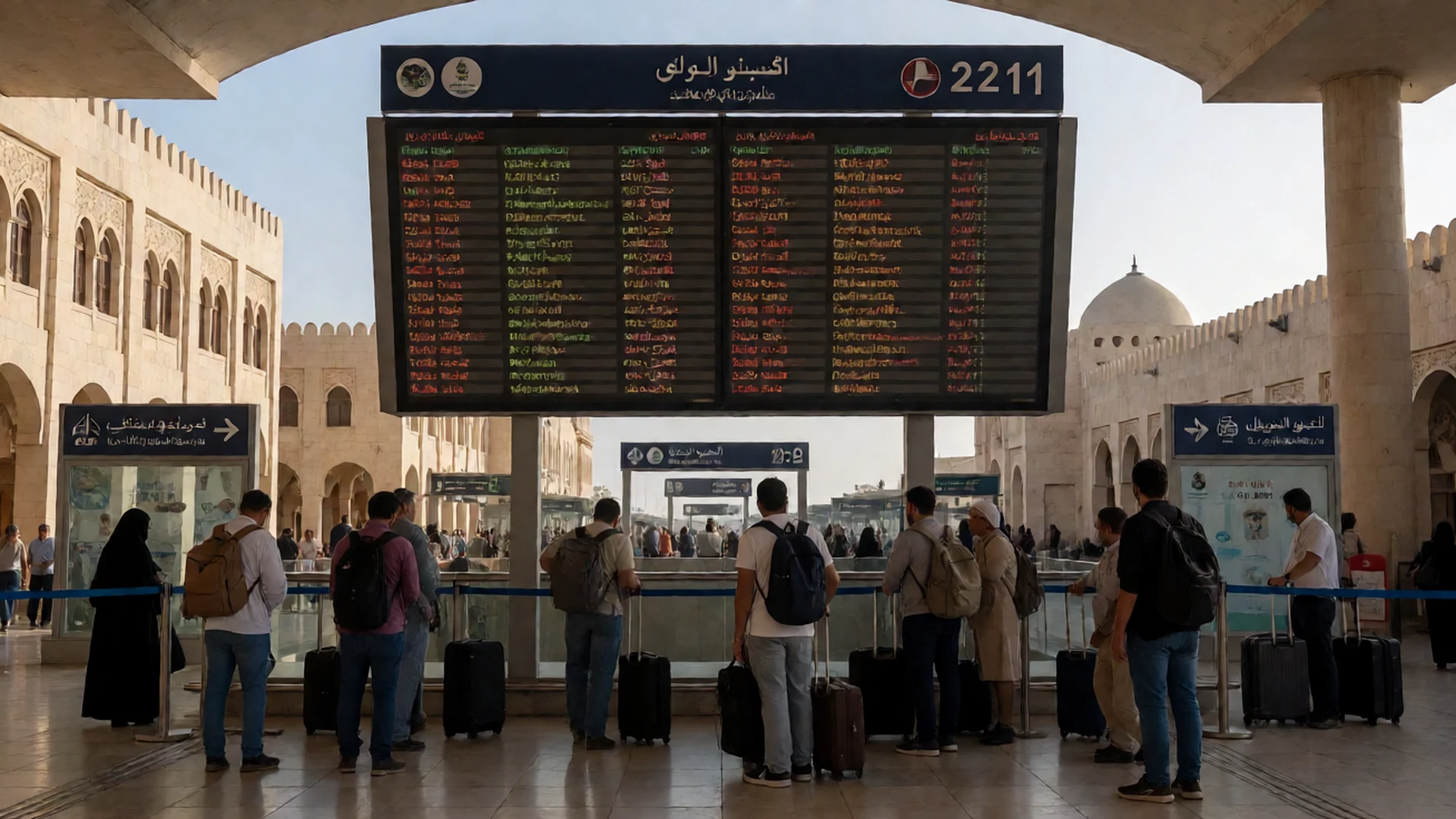
State Department Charter Flights Middle East: Operational Baseline and Transit Realities
Activating diplomatic extraction airlifts signals that commercial corridors across a conflict theatre have reached exhaustion. Recent announcements confirm this contingency posture, outlining dedicated State Dept charter flights Middle East designed to assist citizens navigating international transit collapses.
> "Charter flights set to return stranded Americans as travelers scramble amid Iran war, State Dept. says"
Unlike scheduled commercial flights governed by bilateral treaties, emergency charter evacuations operate under sovereign procurement frameworks. These flights are organized exclusively after commercial options have collapsed or proven insufficient for stranded passenger volumes.
Civil aviation across the Middle East functions as the primary transit junction between Europe, Asia, and Australasia. A regional armed confrontation that forces carrier suspensions immediately strands tens of thousands of intercontinental transit passengers in transit hubs far removed from their final destinations.
Anatomy of Government Evacuation Charters: Logistics, Manifests, and Legal Frameworks The State Dept charter flights Middle East operation came together within days of the airspace notices.
Government evacuation charters are strictly controlled consular missions governed by statutory guidelines and security constraints. The State Department contracts carriers only after securing diplomatic clearances and ground permits.
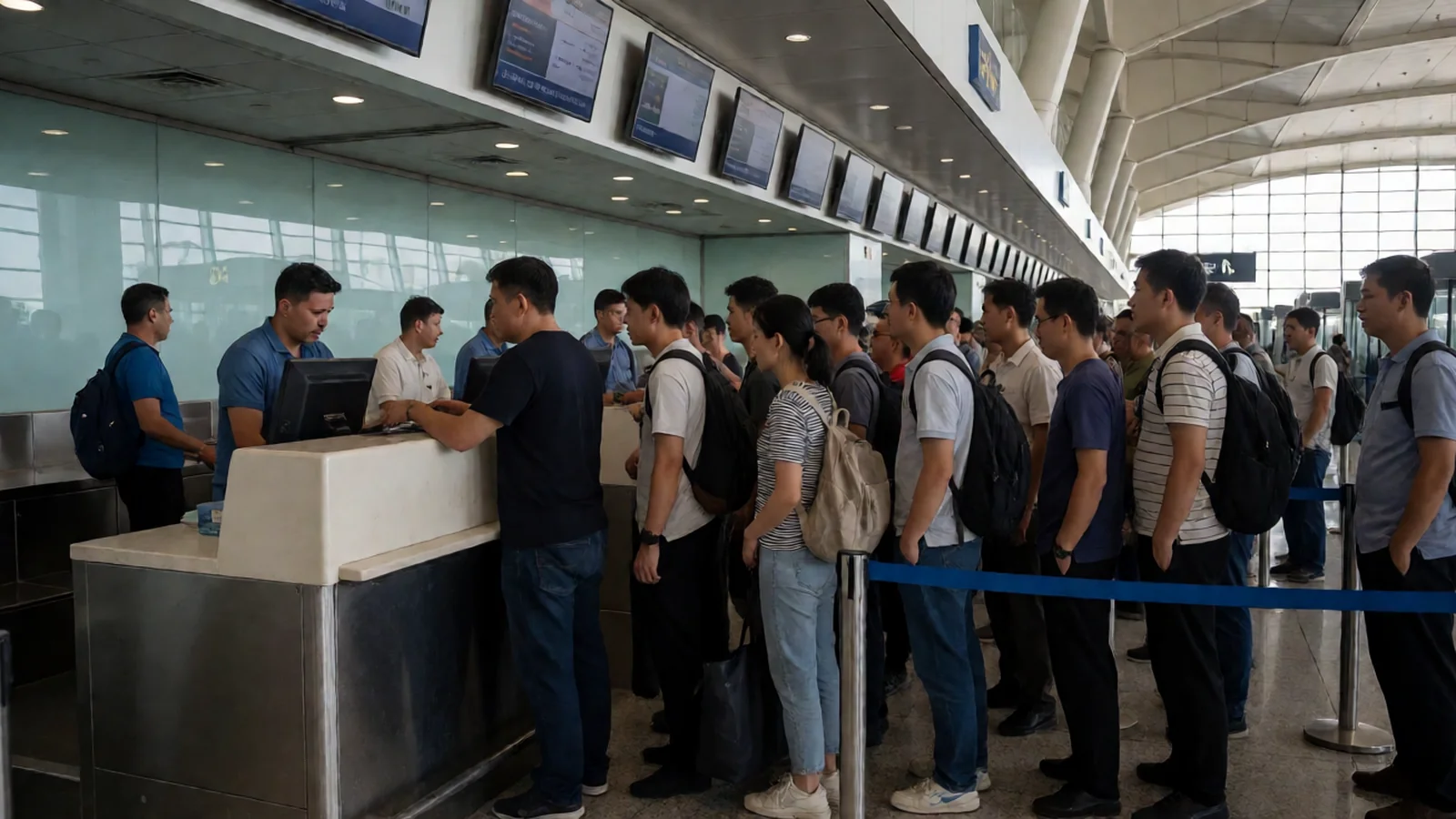
Seats are allocated first to citizens and immediate family, followed by permanent residents and allied nationals. Priority goes to individuals with medical needs, unaccompanied minors, and those in immediate danger.
Manifest management is conducted exclusively through embassy coordination cells rather than commercial reservation distribution systems. Registrants who fail to maintain active Smart Traveler Enrollment Program profiles or whose travel credentials have expired frequently discover that emergency charter manifests cannot accommodate ad-hoc ticketing at terminal gates.
Upon arrival at these staging gateways, evacuees must secure their own onwards commercial carriage, lodging, and onward documentation, transforming what many presume to be a comprehensive rescue into an intermediate tactical repositioning.
Persian Gulf Hub Vulnerabilities: Lessons from the Flydubai Incidents
The stability of Persian Gulf aviation depends on carrier operational discipline and flight deck integrity. However, recent security crises have exposed vulnerabilities within regional airline operations.
> "What the flydubai Flight 1073 incident means for Middle East aviation security"
Internal security risks were highlighted by reports of a radicalized flydubai copilot who attempted to crash an aircraft into an airport terminal before being restrained by a wounded captain and passengers. This breach demonstrated that regional aviation security encompasses insider threats alongside missile and drone hazards.
Western carriers code-sharing with Gulf operators adjust their operational risk models when insider security incidents emerge. Aviation safety departments reassess interline baggage handling, wet-lease agreements, and joint-venture flight numbers, in some instances terminating code-share passenger transfers to insulate their brands from perceived procedural deficits. For passengers on State Dept charter flights Middle East itineraries, baggage and rebooking· rules mirror commercial economy cabins.
Commercial Airspace Compression and Regional Corridors
Regional armed conflict inevitably leads to sweeping Flight Information Region restrictions, closing commercial corridors over Iran, Iraq, and the Levant. When sovereign airspace closes, air traffic controllers divert long-haul passenger flights into narrow bypass lanes over Saudi Arabia, Egypt, and the Caucasus.
Rerouting adds ninety minutes to three hours to flight times between Europe and Asia, increasing fuel burn and requiring payload weight limits. In severe cases, flights execute unscheduled technical refueling stops, disrupting aircraft rotations and crew duty limits.
The physical narrowing of safe flight corridors also increases tactical collision risk and air traffic control workload. When dozens of widebody aircraft arrive simultaneously at narrow corridor entry waypoints, air traffic control centers must enforce expanded longitudinal and vertical separation minima.
Geopolitical Flashpoints: The Strait of Hormuz and Gulf Maritime Security
Airspace safety across the Persian Gulf is linked to naval stability in the Strait of Hormuz. As the primary corridor for global petroleum exports, the strait represents an operational friction zone where naval patrols, drone reconnaissance, and electronic warfare intersect.
> "Will Iran successfully attack major oil terminal in Persian Gulf by EOY 2026?"
Prediction market contracts quantify this underlying friction. Market participants on Manifold placed an implied probability of 0.5418 (54.18%) on a successful attack against a major Persian Gulf oil terminal before the end of 2026, on $85 in volume.
Crowd-forecasting data indicates an implied probability of 0.5418 (54.18%) on Iran striking a major Gulf oil terminal before the end of 2026 ($85 volume). When maritime or petroleum installations in the Persian Gulf sustain kinetic attacks or face credible strike threats, civil aviation authorities immediately widen exclusion perimeters. Officials framed the State Dept charter flights Middle East mission as temporary until scheduled carriers restore normal service.
Quantitative Threat Modeling: Prediction Markets on Diplomatic and Kinetic Horizons
Evaluating transit risk requires quantitative indicators that capture shifting geopolitical probabilities. Prediction markets aggregate intelligence into probabilistic contracts tracking diplomatic prospects and conflict milestones.
A notable metric monitored diplomatic engagement between Washington and Tehran. Polymarket contracts assessing the likelihood of a senior US-Iran diplomatic meeting by September 24, 2026, settled at an implied probability of 0.07 (7.0%) on $9,863 in volume.
| Contract Horizon | Subject / Corridor | Trading Platform | Implied Probability | Notional Volume | Verified Source |
|---|---|---|---|---|---|
| Diplomatic Window Expansion | Senior US-Iran diplomatic meeting by September 30, 2026 | Polymarket | 47.5% (0.475) | $9,992 | |
| Immediate Diplomatic Window | Senior US-Iran diplomatic meeting by September 24, 2026 | Polymarket | 7.0% (0.070) | $9,863 | |
| Energy Terminal Interdiction | Successful attack on major Gulf oil terminal by EOY 2026 | Manifold Markets | 54.18% (0.5418) | $85 | |
| Maritime Navigation Revision | Official new Strait of Hormuz corridor by September 18, 2026 | Manifold Markets | 4.5% (0.045) | $728 | |
| Ultimatum Corridor Reopening | Reopen Strait of Hormuz under political ultimatum | Manifold Markets | 1.0% (0.010) | $1,346 |
These figures underscore that while diplomatic channels remain partially open, risks to commercial corridors remain substantial, explaining airline reluctance to resume normal tracks.
The correlation between low short-term diplomatic prospects and heightened kinetic expectations explains why commercial airlines maintain conservative scheduling policies. When prediction markets price the probability of diplomatic compromise under ten percent, airline flight operations directors anticipate prolonged corridor closures and refuse to restore standard routing corridors.
Ground Friction and Historical Conflict Metrics Across Iranian Border Corridors
Assessing overflight risk requires examining empirical ground combat events within sovereign Iranian boundaries. Data from the Uppsala Conflict Data Program provides documented records of armed clashes across Iranian territory.
UCDP conflict indices document armed clash event 625371 on March 31, 2026, in Iran, resulting in a verified estimate of 3.0 fatalities. A subsequent clash recorded on July 10, 2026 (event 637522) documented a verified estimate of 2.0 fatalities.
The direct link between ground-level armed clashes and civil aviation risk lies in the activation of regional air defense corridors. When ground forces engage in active firefights near border sectors or military installations, sovereign armed forces regularly elevate local surface-to-air missile alert states to maximum readiness. The cost profile of State Dept charter flights Middle East rotations is reimbursed through repatriation loan accounts, as standard practice requires.
Satellite Thermal Evidence and Remote Sensing Along Transit Sectors
Remote sensing data provides physical verification of ground anomalies along transit routes. Earth observation satellites, including NOAA-21 (N21) equipped with the VIIRS sensor, record thermal anomalies capturing high-temperature events, military activity, or industrial flaring across contested sectors.
Spaceborne detections along the Gulf perimeter identify specific thermal anomalies. Regional entity checks confirmed no secondary infrastructure ties.
| Observation Type | Sector Coordinates / Territory | Recorded Date | Primary Detection Metric | Confidence / Observed Impact | Record Source |
|---|---|---|---|---|---|
| Armed Conflict Clash | Iran Western Border Zone | 2026-03-31 | UCDP Conflict Event 625371 | 3.0 Fatalities Recorded | |
| Armed Conflict Clash | Iran Regional Border Zone | 2026-07-10 | UCDP Conflict Event 637522 | 2.0 Fatalities Recorded | |
| Historical Conflict Clash | Iran Domestic Territory | 2019-11-17 | UCDP Conflict Event 426645 | 2.0 Fatalities Recorded | |
| Historical Conflict Clash | Iran Domestic Territory | 2020-03-08 | UCDP Conflict Event 336738 | 1.0 Fatality Recorded | |
| High-Confidence Thermal Point | Lat 33.7, Lon 46.23 | 2026-08-26 | Satellite N21 VIIRS (FRP 18.71 MW) | High Confidence (367.0 K) | |
| High-Confidence Thermal Point | Lat 29.7, Lon 47.62 | 2026-09-11 | Satellite N21 VIIRS (FRP 10.77 MW) | High Confidence (367.0 K) | |
| Nominal Thermal Anomaly | Lat 27.72, Lon 52.17 | 2026-09-06 | Satellite N21 VIIRS (FRP 20.82 MW) | Nominal Confidence (353.93 K) | |
| Nominal Thermal Anomaly | Lat 37.51, Lon 61.0166 | 2026-09-12 | Satellite N21 VIIRS (FRP 5.77 MW) | Nominal Confidence (343.54 K) |
Satellite thermal monitoring provides an empirical check on airspace safety, assisting flight teams in establishing safety buffers around unresolved thermal clusters.
These remote sensing indicators demonstrate the utility of orbital data for validating situational risks along civilian flight sectors. When satellite observations confirm persistent thermal anomalies near air routes, international flight planning teams incorporate precautionary vertical and lateral buffers to keep civilian traffic well clear of unresolved thermal epicenters.
Secondary Hub Congestion: European Entry and Transit Visas
As Middle Eastern hubs restrict schedules, passenger traffic diverts through European transit gateways, including London Heathrow, Frankfurt, Paris Charles de Gaulle, and Amsterdam Schiphol. While these hubs offer alternative flights, diversions create administrative bottlenecks for non-Western passport holders transiting European airports.
A significant challenge during European reroutings involves complex transit visa rules, particularly the UK Direct Airside Transit Visa requirement. Passengers rebooked through London Heathrow frequently discover that airside transfers require a transit visa based on nationality.
The contrast between chaotic international rerouting environments and standardized domestic air corridors is pronounced. While North American travelers debate the relative merits and comfort of premium transcontinental services between West Coast and East Coast gateways, international travelers crossing fragmented Eurasian airspaces face complex visa matrices where minor itinerary adjustments can result in immigration interdiction or border strandings. Monitors tracking State Dept charter flights Middle East movements should watch Najaf, Amman and Tel Aviv gateways for the next rotations.
Commercial Loyalty Programs, Rebooking Policies, and Secondary Disruption
During major transit disruptions, airlines adapt loyalty policies and rebooking flexibility to maintain corporate accounts. Carriers operating outside the conflict zone launch targeted promotions to attract travelers seeking alternative routes.
Secondary travel providers have refined loyalty structures to support travelers navigating complex itineraries. Car rental programs, exemplified by the Avis Preferred tier system, outline specific point earnings and vehicle upgrade pathways.
Enterprise rental management frameworks detail specific qualification tiers, point redemption thresholds, and vehicle upgrade protocols. Understanding the strict limits of commercial loyalty privileges prevents stranded passengers from relying on airline status when sovereign evacuation mechanisms must be activated.
Strategic Rebooking Protocol: Evaluating Government Charters versus Commercial Paths
When facing conflict risks in the Middle East, travelers and travel managers must decide whether to seek evacuation via State Department charter flights or pursue commercial flights. This determination requires weighing operational certainty against booking flexibility.
Commercial flights offer direct ticketing, predictable routing to home airports, and established baggage handling. If a commercial carrier continues to operate from an open airport, securing a seat remains faster than awaiting diplomatic charter processing.
Travel risk directors recommend a dual-track strategy. Travelers should register immediately with the embassy's crisis coordination system to enter the government charter queue while simultaneously holding refundable commercial bookings on carriers routing through northern or southern circumvention tracks.
Insurance Governance, War Risk Surcharges, and Corporate Liability Travel insurance desks reported a surge of questions about State Dept charter flights Middle East coverage in the last 48 hours.
The feasibility of commercial aviation in contested regions is governed by insurance underwriting syndicates. When regional hostilities escalate, insurers designate regional airspaces as war risk zones.
For corporate employers, commercial flight suspensions trigger rigorous duty of care obligations. Standard corporate travel insurance· often excludes coverage for travel in areas under active armed conflict or government Level 4 advisories.
Underwriters cancel standard annual insurance policies and require carriers to purchase seven-day or single-trip hull war risk insurance endorsements at exorbitant premium surcharges. If an airline's management determines that daily war risk premiums exceed the operational revenue generated by passenger fares, the carrier will immediately suspend flights, even if sovereign civil aviation authorities have not officially closed the airspace.
Travel Risk Advisory Thresholds and Institutional Decision Matrices
Managing organizational travel risk during Middle Eastern transit crises requires defined operational thresholds to guide corporate decision-making. Relying on ad-hoc decisions during military crises results in delayed action and stranded personnel.
Corporate travel security protocols should align with government advisory levels and open-source intelligence indicators. When the State Department issues Level 4 "Do Not Travel" advisories or announces emergency evacuation charters, organizations should immediately suspend all non-essential travel to and through the region.
Decision matrices must also establish hard operational rules regarding transit hubs. When regional flight information regions enforce emergency traffic routing schemes, corporate travel policies should prohibit itineraries that involve layovers in perimeter gateways located within tactical missile or drone interception zones. The pattern echoes earlier State Dept charter flights Middle East operations in 2024, when similar notice cycles applied.
Future Airspace Scenarios: Corridor Segmentation and Normalization Horizons
The outlook for Middle Eastern civil aviation points toward persistent corridor segmentation rather than rapid normalization. Structural tensions will continue to dictate conservative routing decisions across the region.
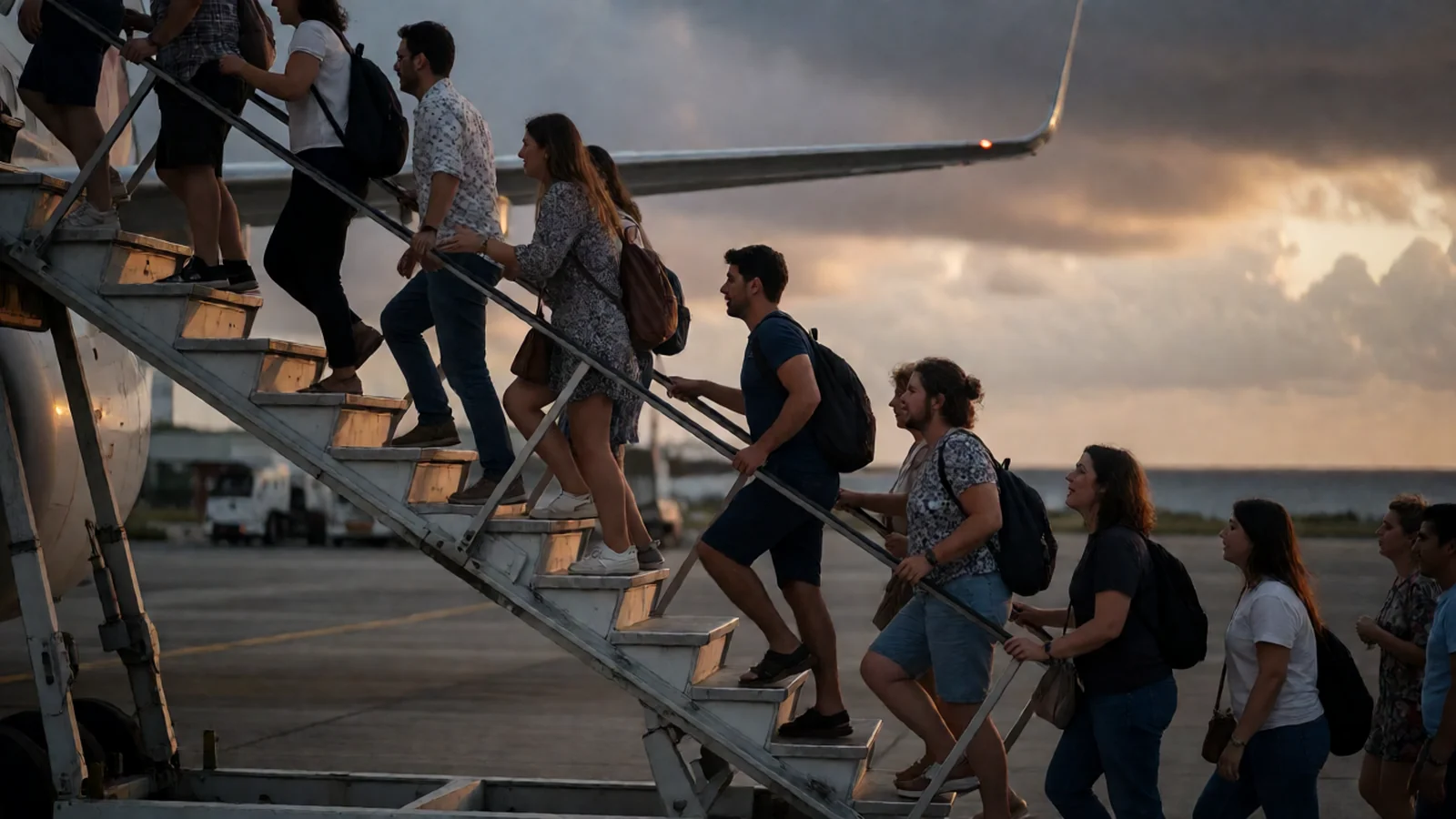
In the near term, commercial flights will operate under dynamic security assessments, with carriers actively avoiding flight paths near high-risk maritime and border sectors. Regional airlines will maintain rigorous crew vetting protocols and contingency plans to mitigate insider security threats.
The structural fragmentation of Eurasian air corridors has established a permanent operating premium, forcing airlines to build extensive contingency routing profiles into their long-term fleet allocations and timetable filings. In the intermediate phase, international civil aviation bodies and regional transport ministries may establish formalized, deconfliction bypass tracks designed to isolate civilian transit corridors from tactical military zones.