
Thailand 60-Day Visa Exemption Reduced to 30 Days: Official Royal Gazette Breakdown & Overstay Avoidance Guide
Official Royal Gazette directives revert bilateral visa-free entry to 30 days starting September 15, ending the 60-day temporary regime; travelers on extended stays must audit return tickets to avoid boarding denial and overstay fines.
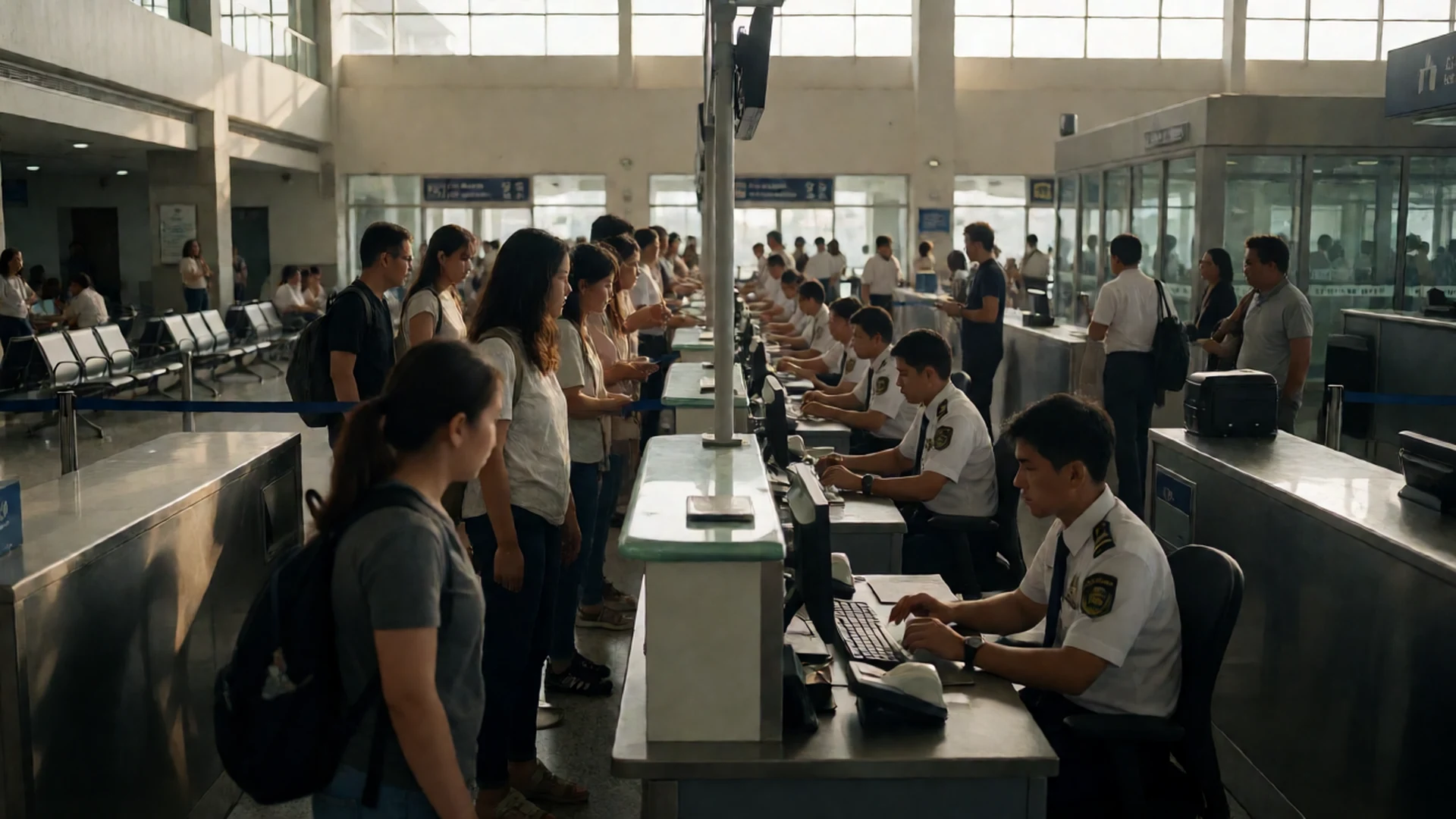
Official Policy Pivot: The Royal Gazette Decrees
The temporary 60-day visa exemption scheme implemented by the Thai Ministry of Interior in mid-2024 has officially concluded. Pursuant to the Royal Thai Government Gazette (Vol. 143, Special Issue 207 Ngor, published August 31, 2026), four new ministerial regulations have entered into formal legal force, establishing September 15, 2026, as the statutory cutoff date. Bilateral visa-exempt arrivals are now returned to the standard 30-calendar-day entry threshold.
This regulatory reversal replaces the expansive 60-day allowance that had served as an economic stimulus measure across late 2024 and 2025. International travelers and digital nomads planning extended winter stays in Southeast Asia must immediately reconcile their travel dates. The revised framework re-establishes rigid immigration boundaries, meaning itineraries booked under the assumption of an unconditioned two-month stay now violate standard entry thresholds.
Precise Country Breakdown: 60 Eligible Nations vs Retained VOAs
Contrary to preliminary ministerial press releases that cited 59 beneficiary states, the final promulgated Royal Gazette text explicitly specifies 60 qualifying countries and territories entitled to 30-day visa exemption. This roster includes passport holders from the United States, Canada, the United Kingdom, European Union member states, Australia, New Zealand, Japan, South Korea, and Singapore.
Concurrently, two jurisdictions previously operating under expanded discretionary bilateral accords have had their unilateral exemption terms curtailed to 15 calendar days. Three additional states remain strictly confined to the Visa on Arrival (VOA) mechanism, which imposes non-extendable 15-day limits and mandatory port-of-entry application fees.
| Entry Category | Prior Policy Window | Promulgated Statute (Sept 15) | Mandatory Onward Ticket Horizon |
|---|---|---|---|
| Bilateral Exemption (60 Nations) | 60 Calendar Days | 30 Calendar Days | Within 30 days of confirmed arrival |
| Special Bilateral Agreements (2 Nations) | 30 Calendar Days | 15 Calendar Days | Within 15 days of confirmed arrival |
| Visa on Arrival (VOA - 3 Nations) | 15 Calendar Days | 15 Calendar Days | Strictly within 15 days (Non-extendable) |
| Destination Thailand Visa (DTV) | 180 Days (Specialist) | Unchanged (Requires Pre-Approval) | Valid within designated multi-entry window |
Grandfathering & Transition Clauses: Who Retains 60 Days
Crucially for travelers currently on the ground, the statutory text contains an explicit non-retroactivity clause. Foreign nationals who completed border immigration formalities prior to 23:59 ICT on September 14, 2026, retain the full 60-day authorization stamped into their physical passports upon arrival. Immigration checkpoints at Bangkok Suvarnabhumi (BKK), Don Mueang (DMK), and Phuket (HKT) will not curtail existing valid stamps.
However, any physical entry recorded from September 15 onward is stamped strictly for 30 calendar days. Travelers attempting back-to-back overland border runs to reset status face enhanced scrutiny, as Immigration Bureau Directive 244/2026 empowers border superintendents to deny entry if consecutive exemption entries exceed two within any rolling twelve-month interval.
The Airline Boarding Threat: Strict Onward Travel Audits
The operational danger for international passengers does not begin at Thai immigration counters; it strikes at the departure check-in desk. Commercial airlines operate under strict carrier liability rules mandated by the International Air Transport Association (IATA) Timatic database. When check-in agents verify documentation for travelers holding 30-day exemptions, the reservation system automatically flags itineraries lacking confirmed onward travel within 30 days.
If a passenger presents a return ticket dated 45 days after arrival without presenting a pre-approved consular visa or Destination Thailand Visa (DTV), gate staff are legally instructed to refuse boarding pass issuance. To secure your journey, verify that your departure leg complies with the 30-day ceiling before arriving at the departure hub, and secure a high-speed data connection via an eSIM data connectivity· provider to manage urgent itinerary changes on the fly.
Historical Continuum: The Pendulum of Sovereign Border Administration
Sovereign visa regimes historically move in cycles between economic stimulus and border compliance. Archival travel surveys from the early twentieth century illustrate how Siam's maritime and riverine customs checkpoints along the Chao Phraya basin periodically loosened entry privileges to jumpstart regional commerce, only to tighten regulatory screening once infrastructure capacity met statutory limits. The 2024–2025 temporary 60-day expansion operated as a digital-era mirror of this historical playbook—spurring post-pandemic tourism before transitioning back to the institutional equilibrium of 30 days.
For travelers and regional expatriates, the 30-day threshold is not an arbitrary penalty, but the restoration of Thailand's statutory immigration baseline. With automated biometric gates scaling across major international hubs, enforcement of departure timelines is now digital and absolute. Managing this boundary requires disciplined advance documentation rather than speculative reliance on discretionary border leniency.
Practical Action Plan: Legal 30-Day Extensions & Penalties
Travelers already in Thailand who require additional stay time must execute a formal administrative extension rather than relying on border runs. An eligible traveler admitted under the 30-day exemption may apply for a single 30-day extension of temporary stay at any provincial Immigration Office (such as Chaengwattana in Bangkok or the Phuket Immigration Bureau).
The extension application requires an official fee of 1,900 THB, Form TM.7, a passport-sized photograph, proof of registered accommodation (TM.30 compliance), and a confirmed outbound ticket within the requested 30-day extension window. When organizing long-term stays, securing comprehensive travel medical insurance· covering unexpected hospitalization shields travelers from high overseas medical expenses, while scheduling a pre-arranged airport private transfer· guarantees documented transport receipts for consular reconciliation.
| Duration of Overstay | Financial Penalty | Administrative Sanction | Re-entry Blacklist Bar |
|---|---|---|---|
| 1 to 20 Days (Voluntary Surrender) | 500 THB per day (Max 20,000 THB) | Overstay stamp endorsed in passport | No mandatory re-entry bar |
| More than 90 Days (Voluntary) | 20,000 THB statutory cap | Formal deportation order | 1-Year Re-entry Prohibition |
| More than 1 Year (Voluntary) | 20,000 THB statutory cap | Detention at IDC Suan Phlu | 3-Year Re-entry Prohibition |
| Apprehended by Police (Under 1 Year) | Fine adjudicated by Court | Immediate custodial detention | 5-Year Mandatory Exclusion |
Directives for Corporate Mobility Desks
Corporate travel officers managing personnel stationed in or traveling to Thailand should institute three mandatory controls immediately:
- Audit All Active Bookings: Pull all corporate itineraries into Thailand scheduled between October 2026 and March 2027. Flag any ticket pairing where the return segment exceeds 30 calendar days.
- Mandate TM.30 Proof from Lodging: Ensure that contracted serviced apartments and hotels in Bangkok and Chiang Mai submit electronic TM.30 notifications within 24 hours of guest arrival, as missing TM.30 records will stall visa extension filings.
- Pre-Authorize Ground Logistics: Minimize transit delays upon arrival by deploying verified point-to-point transit services directly to regional work sites.