

Executive Summary: Three Documents, One Question, Three Checkpoints
Between 20 and 22 October 2026, three entry-related documents entered circulation and none of them is about the same thing, even though all three are routinely filed under the word "visa." [source-1] [source-2] [source-3]
Myanmar's embassy in Brazil published a notice titled Visa on Arrival for Japan, Republic of Korea, Macau (SAR of China) Nationals, carrying an effective date of 21 October 2026. [source-2]
The Government of Belize press office published a notice that its Ministry of Immigration is announcing upcoming updates to the Mexican Border Crossing Card application process. [source-3]
The U.S. Centers for Disease Control and Prevention's port health authority carries an order requiring attestation for all airline or other aircraft passengers arriving in the United States. [source-4]
Read as a list of "visa news," the trio is incoherent: one is about arrival in Myanmar, one about a Mexican document administered from Belize, one about attestation into the United States. Read as a list of entry instruments, they line up on an axis that matters more than nationality — at which point in the journey the check happens, and who is obliged to perform it. [source-2] [source-3] [source-4]
| Instrument | Issuer | Effective / status | Who performs the check | Where a failure surfaces |
|---|---|---|---|---|
| Visa on arrival (Myanmar) | Embassy of Myanmar, Brazil | Effective 21 Oct 2026 | Immigration officer at the Myanmar port of entry | Arrival hall |
| Mexican Border Crossing Card, application process update | Ministry of Immigration, Belize | Announced as upcoming | Consular / application processing staff | Application queue, weeks ahead |
| Attestation order for arriving air passengers | CDC port health authority, United States | Standing order, in force | Airline or aircraft operator, before boarding | Check-in counter or gate |

That table is the article in compressed form. The rest explains why the third row is structurally different from the first two, and what the batch does not tell you. [source-4]
1. Myanmar: A Permission Issued at the Border
A visa on arrival is not a visa in the sense most travellers use the word. A visa granted at a mission before travel is a decision made by a government in advance, on paper, in a building the traveller may never enter again. A visa on arrival is a permission granted at the port itself, by the officer standing at the counter, on the basis of documents the traveller carries and a fee paid on the spot. [source-2] [source-5]
The distinction decides what a traveller should prepare. With a visa issued in advance, the failure mode is a refusal learned weeks before departure, while plans can still change. With a visa on arrival, the failure mode is a refusal after a long-haul flight, in a queue, with no appeal window and no ability to re-enter the aircraft. [source-5]
The Myanmar notice puts the arrangement in its title: Japan, Republic of Korea, and Macau (SAR of China) nationals, effective 21 October 2026. [source-2] Three nationalities, one instrument, one effective date. A traveller who holds a passport from any of the three and is planning to enter Myanmar after that date is operating under a different rule than one who entered before it, and the difference is not a fee change or a form change — it is the existence of the permission channel at the port. [source-2]
There is a second, quieter fact in how the notice travelled. It was published by Myanmar's embassy in Brazil — a mission in a country whose nationals are not named in the title. [source-2] That is normal for consular notices and it is also a warning about retrieval: arrival rules are among the few categories where the publishing mission's location has almost no bearing on applicability, so a searcher who filters by their own region can miss a notice that does apply. [source-2] [source-6]
What the notice does not state, and what this article therefore will not assert, is the permitted duration of stay, the fee, the required supporting documents, or whether the arrangement is a pilot with a stated end date. None of that is in the material reviewed. [source-2]
2. Belize: A Border Card Whose Application Queue Is the Bottleneck
The Belize notice is the hardest of the three to read from its headline, because a Mexican Border Crossing Card is neither a Belizean entry document nor a document granted by Mexico at the Belizean border. It is administered through an application process, and the notice concerns an upcoming update to that process, not a change to eligibility. [source-3]
That distinction places the bottleneck somewhere most travellers never look. An updated application process does not change who may cross; it changes how long the crossing takes to arrange, which documents accompany the application, and where the applicant has to be while it is being processed. [source-3] [source-7]
The operational consequence is lead time, and lead time is the one variable a traveller controls. A permission granted at a port requires no advance action beyond carrying the right papers. A permission granted through an application process requires filing early enough that the process completes before the travel date, and a process being updated carries a specific risk: applications filed under the outgoing process may need to be refiled under the incoming one. [source-3] [source-7]
The notice is dated 20 October 2026 and described as announcing upcoming updates, which places the change in the future rather than in force. [source-3] For planning purposes that is the useful reading: anyone whose crossing depends on this card and whose travel falls after the change should confirm the process directly with the administering office rather than rely on a description of the previous process, because the previous process is the thing being replaced. [source-3]
3. The CDC Order: The Obligation Lands on the Carrier
The third document is the one that changes the mechanics rather than the paperwork. The CDC's port health authority carries an order requiring attestation for all airline or other aircraft passengers arriving in the United States. [source-4]
An attestation is a statement signed by a person who asserts its truth. Where the order requires attestation from passengers, the practical architecture is a two-stage check: the passenger makes the statement, and the airline or aircraft operator is the party positioned to collect it before boarding, because the carrier is the party that would otherwise carry a non-compliant passenger to a U.S. port. [source-4] [source-8]
This is the structural difference from the other two instruments, and it is not a difference of severity. A visa on arrival is enforced by an immigration officer at the destination. An application process is enforced by an administrative queue. An attestation order enforced through a carrier is enforced by a check-in agent who has no discretion to board a passenger without the document. [source-4] [source-8]
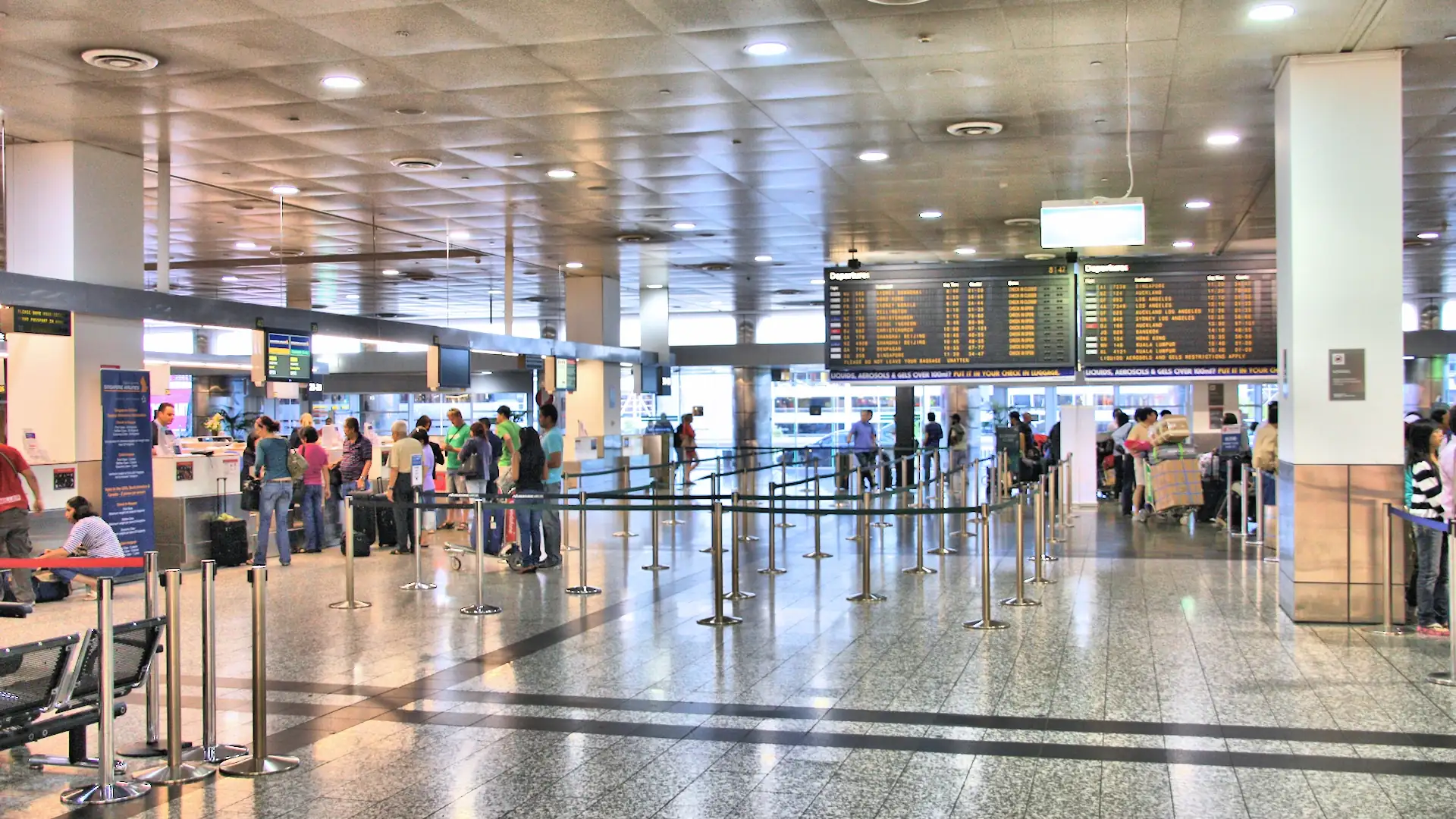
For a traveller the consequence is about where the failure happens: at the arrival hall after the flight in the Myanmar case, weeks before departure in the Belize case, at the counter in the attestation case. The counter is the best of the three places to discover a problem, because a traveller turned away at check-in can still rebook and one turned away on arrival usually cannot. [source-4]
It is also the instrument most likely to be misread as a formality. Attestation requirements are often described as "a form you sign," which understates what the form does: it transfers the representation of compliance onto the traveller and the verification of it onto the carrier. [source-4] [source-8]
4. The Axis That Explains the Batch
Placing the three instruments on one axis produces a cleaner reading than sorting them by country. [source-2] [source-3] [source-4]
- Checkpoint at the border. The permission is granted or refused by an officer at the port, on the day, on the basis of documents carried. Myanmar's visa on arrival is this class. Advance action required: none beyond carrying the right documents. Failure discovered: at arrival.
- Checkpoint in an administrative queue. The permission is granted by a processing office, on a timeline, on the basis of an application. The border crossing card process is this class. Advance action required: file early enough for the process to complete. Failure discovered: before departure, if the application was filed in time to learn the answer.
- Checkpoint at the carrier's counter. The representation is made by the traveller and collected by the airline. The attestation order is this class. Advance action required: hold the attestation before check-in. Failure discovered: at the counter.
The table's right-hand column is the part worth memorising, because it is the only column a traveller can act on. The three instruments are governed by three governments, cover three unrelated routes, and share no nationality list. What they share is that each relocates the moment of decision, and that moment determines whether a problem is recoverable. [source-2] [source-3] [source-4]
5. What This Batch Measures, and What It Does Not
The three records reached this scan through semantic retrieval over official-source domains, and the numbers attached to them describe retrieval, not risk. [source-1]
The search-rank normalised scores are 86.0, 93.0 and 79.0 for the Myanmar, Belize and CDC items respectively — these are position values from a retrieval layer, where a higher figure means the document surfaced earlier for its query, not that the rule is more restrictive. [source-1] [source-9]
| Document | Composite heat | Major-event probability |
|---|---|---|
| CDC attestation order | 52.7 | 0.384 |
| Myanmar visa on arrival | 41.4 | 0.166 |
| Belize border card update | 37.7 | 0.263 |
The composite heat figures in this batch are 41.4, 37.7 and 52.7 out of 100, all in the lower half of the day's distribution, and the model's major-event probabilities are 0.166, 0.263 and 0.384. [source-1]
Read together, those figures say something specific and modest: this was a day of administrative instruments, not a day of entry bans. An administrative change can still matter enormously to the person it applies to, and it will never rank highly on a heat measure, because heat tracks attention. [source-1] [source-9]
The search-interest layer contributed nothing here, and that is reportable. The rising-query list attached to the United States japan travel seed this week is topped by train travel in switzerland at breakout level, healthy recipes at breakout level, and best laptop for work at +250%, with standing queries led by travel to japan at an index of 100, tokyo japan at 18 and tokyo at 17. [source-10] None of the rising terms is a visa query. A trend layer that returns recipe and laptop searches for a travel seed is not measuring travel intent this week, and it should not be cited as evidence either way. [source-10]

6. What the Batch Does Not Establish
Four things are commonly asserted about a batch like this and none of them follows from the material. [source-1] [source-2] [source-3] [source-4]
It does not establish a coordinated change. Three governments acting within 72 hours is a coincidence of publication schedules. The instruments cover different nationalities, destinations and legal bases, and no document references another. [source-2] [source-3] [source-4]
It does not establish tightening or loosening. A visa on arrival appears as an opening of a channel for three nationalities; an application process being updated is directionally neutral until the update's content is known; an attestation order restricts according to what is attested. [source-2] [source-3] [source-4]
It does not establish an effective date you can rely on for the Belize item. That notice announces upcoming updates rather than a change in force, and the difference between "announced" and "in force" is the difference between planning and guessing. [source-3]
7. Practical Preparation, Derived From the Axis
The useful output of this batch is a checklist organised by checkpoint rather than by country. [source-2] [source-3] [source-4]
- Identify the checkpoint before booking. For a visa on arrival it is the arrival hall and the only preparation is documents and fee. For an application-based document it is a queue measured in weeks. For an attestation it is the check-in counter. Getting this wrong is the most common way an otherwise compliant traveller misses a flight. [source-2] [source-4]
- Treat "upcoming" as a prompt to confirm, not a date to plan around. Where a process is being updated, the previous process is the thing being replaced. [source-3]
- Carry the notice, not a summary of it. A consular notice published by a third-country mission is still the operative record of the rule it describes. [source-2]
- Assume the carrier will check what the destination requires. Attestation orders enforced through operators put a party with no discretion between the traveller and the aircraft. [source-4] [source-8]
For the connectivity and ground side of the same trip, a data plan that works on arrival prevents the specific failure of being unable to reach an embassy or an airline while standing in a queue — an eSIM plan built for short-stay travellers covers that leg. A fixed-price airport transfer removes the negotiated-taxi variable from the arrival hall, which is where a visa-on-arrival decision gets made. And where a document problem converts into a missed connection rather than a refused entry, a flight compensation claim is the mechanism that prices the delay. Learn more about how OSINTRAI classifies entry instruments in the intelligence archive. [source-11] [source-12] [source-13]
8. Conclusion: Read the Instrument Class
Three documents, three governments, three nationalities, and one axis that makes the batch legible. [source-2] [source-3] [source-4]
The Myanmar notice says a permission now exists at the port for three passport holders from 21 October 2026, and the thing to prepare is documents, not an application. [source-2] The Belize notice says an application process is about to change, and the thing to prepare is lead time plus a confirmation call. [source-3] The CDC order says an attestation is required of arriving passengers and collected by the carrier, and the thing to prepare is the document in hand before check-in. [source-4]
A traveller who files all three under "visa news" learns nothing usable. A traveller who asks which checkpoint each instrument creates learns three separate things, each actionable, none of which requires knowing what the other two say. The instrument class is the transferable part; the country is the detail.
📑 Verified Evidentiary References (40 sources) — click to expand
- [1] OSINTRAI: Scan osintrai.com/intel/geo
- [2] Myanmar: VOA myanmarbsb.org/_site/visa-on-arrival-for-j…
- [3] Belize: BCC pressoffice.gov.bz/ministry-of-immigration…
- [4] CDC: Attestation cdc.gov/port-health/legal-authorities/atte…
- [5] IATA: Timatic iata.org/en/services/compliance/timatic
- [6] State: Country travel.state.gov/content/travel/en/interna…
- [7] State: Visas travel.state.gov/content/travel/en/us-visa…
- [8] ICAO: Annex9 icao.int
- [9] Exa: Retrieval exa.ai
- [10] Trends: Queries trends.google.com/trends/explore
- [11] OSINTRAI: Registry osintrai.com/intel/geo
- [12] IATA: Trade iata.org
- [13] State: Levels travel.state.gov/content/travel/en/travela…
- [14] WHO: Notices who.int
- [15] UNWTO: Facilitation unwto.org
- [16] OSINTRAI: Register osintrai.com/intel/geo
- [17] CBP: Border cbp.gov
- [18] CDC: Ports cdc.gov/port-health
- [19] Myanmar: Notice myanmarbsb.org
- [20] Belize: Notice pressoffice.gov.bz
- [21] Canada: Advice travel.gc.ca
- [22] FCDO: Advice gov.uk/foreign-travel-advice
- [23] ICAO: Annex3 icao.int
- [24] ReliefWeb: Reports reliefweb.int
- [25] OSINTRAI: Archive osintrai.com/intel/geo
- [26] State: Advisories travel.state.gov/content/travel/en/travela…
- [27] USEmb: Saudi sa.usembassy.gov
- [28] USEmb: Beirut lb.usembassy.gov
- [29] USEmb: UAE ae.usembassy.gov
- [30] USEmb: Ethiopia et.usembassy.gov
- [31] OSAC: Reporting osac.gov
- [32] ACI: Airports aci.aero
- [33] EASA: Notices easa.europa.eu
- [34] JMA: Warnings jma.go.jp
- [35] WMO: Cyclones wmo.int
- [36] FAA: Advisories faa.gov
- [37] USGS: Ashcodes usgs.gov
- [38] UCDP: Conflict ucdp.uu.se
- [39] NOAA: Cyclones noaa.gov
- [40] OSINTRAI: Routes osintrai.com/intel/geo