Summary
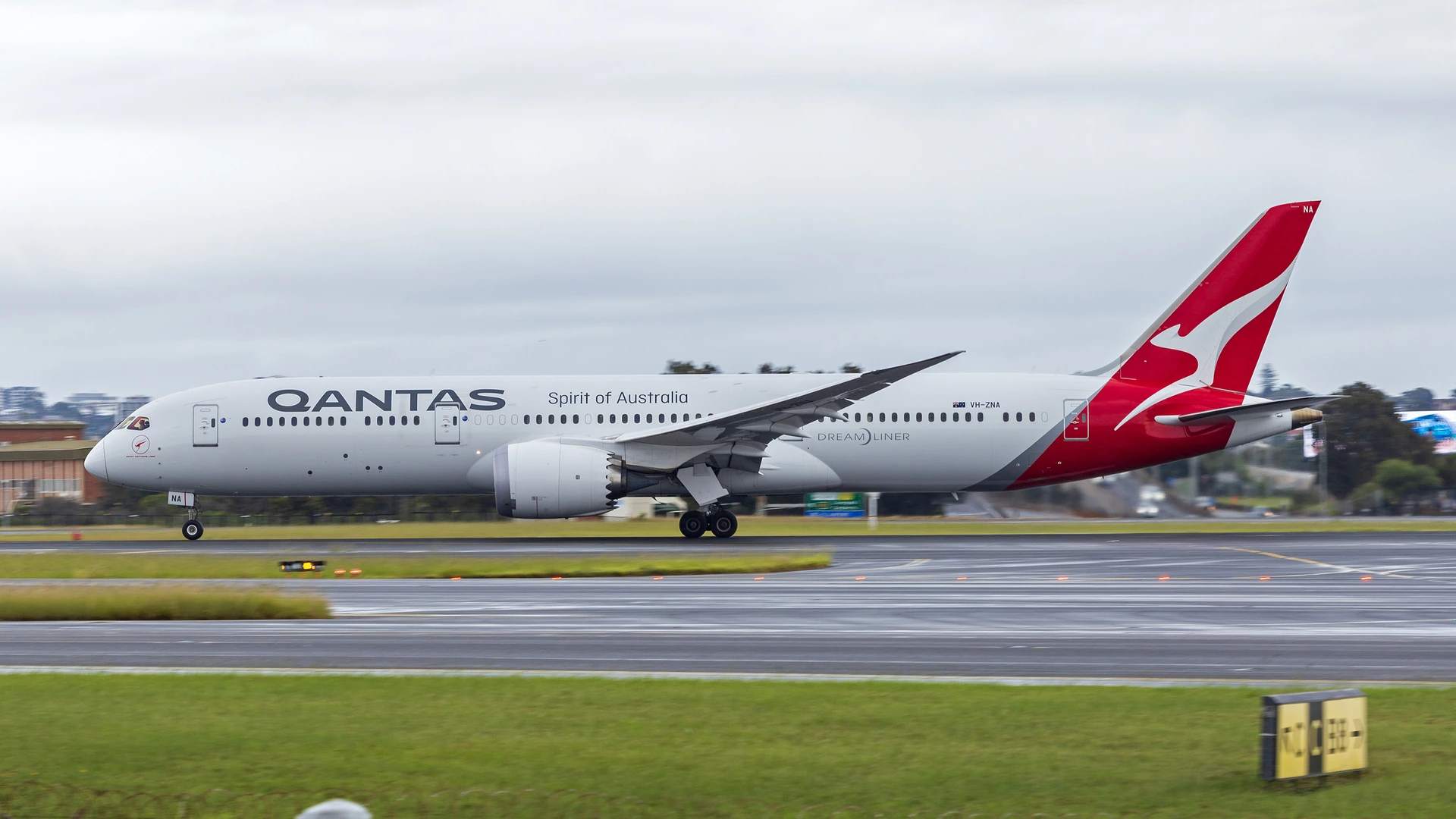
Qantas flight QF5 carried a reported bed-bug outbreak into Rome on 9 October 2026; the Boeing 787 was grounded for a deep clean and the Rome-Perth return, QF6, was cancelled the next day. Because QF6 departs an EU airport, the operative regime is EU261, not UK261: a cancellation notified inside 14 days on a route over 3,500 km pays a fixed €600 per passenger, on top of a refund or re-routing and a duty of care that applies regardless.
Data Snapshot


EU261 fixes compensation by route distance, not ticket price: €250 up to 1,500 km, €400 for 1,500-3,500 km, and €600 above 3,500 km when arrival slips four hours or more. Rome-Perth sits far beyond the long-haul threshold.
Seventeen Hours Trapped on QF5: Antihistamine Depletion and the 50-Day Disinsection Cycle
The grounding of QF6 on 10 October 2026 was triggered by events during nearly 17 hours of non-stop flight [source-1][source-2]. On 9 October 2026, Qantas flight QF5 departed Perth for Rome on one of the world's longest commercial sectors [source-1][source-2]. Mid-flight, passengers in the economy cabin reported active insect bites to flight attendants [source-1][source-2]. Cabin crew treated affected passengers with onboard first-aid supplies, but medical stocks were exhausted and antihistamines ran out completely before landing in Italy [source-1][source-2].
Following arrival at Rome Fiumicino, Qantas confirmed the outbreak had affected a "small number" of economy seats [source-1][source-2]. However, the presence of active pests in passenger furnishings prevented a normal turnaround [source-1]. Qantas grounded the Boeing 787 Dreamliner in Rome for an intensive deep clean [source-1][source-2]. Australian news networks reported on 13 October 2026 that passengers remained delayed in Rome for up to 48 hours while the carrier arranged rebookings [source-2][source-7].
Cabin pest remediation presents severe operational hurdles [source-2]. Commercial aircraft routinely undergo precautionary disinsection every 50 days [source-2]. Yet when live bed bugs infest seating, routine sprays are inadequate [source-2]. Total fumigation is rarely conducted on commercial aircraft because chemical fumigants risk damaging sensitive cabin wiring and electronic systems [source-2]. Consequently, airline maintenance crews must execute manual, labor-intensive extraction and seat disassembly [source-1][source-2].
Public health authorities categorize bed bugs through a distinct medical standard [source-2]. New South Wales Health assessments explicitly establish [source-2]:
"not a public health hazard and are not known to spread disease" [source-2]
Although bed bug bites cause intense irritation and distress, they do not transmit infectious pathogens [source-2]. Nonetheless, aviation consumer protection regimes evaluate cancellations by delay duration rather than epidemiological severity [source-3][source-4].
The EU261 Statutory Thresholds: How Distance and Delays Dictate the €600 Payout
For passengers navigating disrupted intercontinental connections governed by British and European consumer frameworks, financial entitlements are defined by statutory distance and delay thresholds [source-3][source-4]. Under Regulation (EC) No 261/2004 (EU261), passengers departing any airport inside the European Union — on any carrier, Qantas included — are entitled to fixed cash compensation when a cancellation causes substantial arrival delays; the UK's retained mirror, UK261, applies the same structure to flights departing UK airports or arriving in the UK on UK or EU carriers [source-3][source-6]. The statute divides commercial flight routes into three standardized distance tiers [source-3][source-6].
The first tier governs short-haul flights under 1,500 km, providing statutory compensation of €250 per passenger when an arrival delay reaches three hours [source-3][source-6]. An example is the route between Glasgow and Paris [source-6]. The second tier covers medium-haul flights between 1,500 km and 3,500 km, setting statutory compensation at €400 per passenger for delays of three hours or more, illustrated by routes like Manchester to Athens [source-3][source-6].
The third tier applies to long-haul routes exceeding 3,500 km [source-3][source-4]. On long-haul journeys, arrival delays between three and four hours entitle passengers to a reduced payment of €300 [source-3][source-4]. Once the final arrival delay reaches four hours or more, statutory compensation escalates to the maximum entitlement of €600 per passenger [source-3][source-4]. For connecting journeys booked under a single confirmation, compensation is assessed based on total delay at the final destination [source-6]. Flights booked on separate tickets are evaluated independently [source-6].
Because Rome to Perth spans nearly 13,000 km—far exceeding the 3,500 km statutory threshold—any cancellation delaying arrival by more than four hours triggers the maximum €600 entitlement [source-1][source-3][source-4]. With Qantas rebooking passengers across a 48-hour window, delayed travellers comfortably met the four-hour threshold [source-1][source-2][source-7]. Stranded travellers pursuing recovery routinely submit formal flight cancellation compensation UK claims to obtain statutory compensation from operating carriers [source-3][source-6].
Statutory Cancellation Matrix: Notice Periods, Haul Lengths, and Cash Entitlements
The financial liability of an air carrier under EU261 depends directly on the advance notice provided prior to scheduled departure [source-4]. Consumer protection guidelines published by Gloucestershire County Council codify cancellation compensation across three distinct notification windows: more than 14 days, seven to 14 days, and fewer than seven days [source-4]. When an airline cancels a flight with fewer than seven days of notice, passenger compensation rights reach their highest level [source-4].
Under the seven-day notice threshold, an airline avoids compensation only if it provides re-routing that departs within one hour of original departure and arrives less than two hours late [source-4]. When an intercontinental flight is grounded on the departure date itself—as occurred with QF6 in Rome—the carrier provides zero days of notice [source-1][source-4]. The airline is held to statutory compensation schedules unless an extraordinary defense is established [source-4].
The statutory compensation matrix is codified by journey distance and arrival delay [source-3][source-4]:
| Flight Distance Band | Haul Classification | Notice Period | Arrival Delay Threshold | Statutory Cash Entitlement | Regulatory Legal Source |
|---|---|---|---|---|---|
| Up to 1,500 km | Short-Haul Sector | Under 7 days notice | Arriving 2 hours or more late | €250 per passenger | EU261 / Reg. 261/2004 [source-3][source-4] |
| 1,500 km to 3,500 km | Medium-Haul Sector | Under 7 days notice | Arriving 3 hours or more late | €400 per passenger | EU261 / Reg. 261/2004 [source-3][source-4] |
| Greater than 3,500 km | Long-Haul Sector | Under 7 days notice | Arriving between 3 and 4 hours late | €300 per passenger | EU261 / Reg. 261/2004 [source-3][source-4] |
| Greater than 3,500 km | Long-Haul Sector | Under 7 days notice | Arriving 4 hours or more late | €600 per passenger | EU261 / Reg. 261/2004 [source-3][source-4] |
| Greater than 3,500 km | Long-Haul Sector | 7 to 14 days notice | Re-route arriving 4 hours or more late | €600 per passenger | Gloucestershire Consumer Guide [source-4] |
| Greater than 3,500 km | Long-Haul Sector | 7 to 14 days notice | Re-route arriving under 4 hours late | €300 per passenger | Gloucestershire Consumer Guide [source-4] |
An airline can only avoid paying compensation by proving an explicit statutory exception [source-4][source-5]. As codified in EU261 statutory rules, the carrier must demonstrate that the disruption resulted from [source-4]:
"extraordinary circumstances which could not have been avoided even if all reasonable measures had been taken" [source-4]
Statutory consumer guidance clarifies that routine technical defects and mechanical failures do not constitute extraordinary circumstances [source-4]. Cancelled passengers maintain their statutory right to care, including accommodations and meals, regardless of whether extraordinary circumstances apply [source-4].
The Wallentin-Hermann Doctrine: Why Pest Infestation Fails the Extraordinary Test
When airlines seek to avoid compensation following unscheduled maintenance groundings, they routinely invoke extraordinary circumstances [source-4][source-5]. Under EU261 and European case law, however, the scope of what qualifies as extraordinary is strictly constrained [source-5][source-6]. Established aviation jurisprudence distinguishes between external emergencies beyond carrier control and inherent operational maintenance issues [source-5][source-6].
The core legal precedent governing technical and mechanical disruptions is the Court of Justice of the European Union (CJEU) ruling in Wallentin-Hermann v Alitalia (Case C-549/07) [source-5]. In Wallentin-Hermann, the court established that technical defects and routine system failures are inherent in the normal exercise of an air carrier's activity and cannot be treated as extraordinary circumstances [source-5]. Because operating commercial aircraft inevitably involves wear, tear, and maintenance challenges, carriers must manage technical defects as standard operating responsibilities [source-5]. A technical issue is only extraordinary if it stems from external acts such as hidden manufacturing defects or sabotage [source-5][source-6].
The court expanded this principle in Case C-28/20, determining that strikes organised by an airline's own employees are inherent in operational management and do not constitute extraordinary circumstances [source-5][source-6]. Genuine extraordinary circumstances are restricted to external events such as severe snowstorms, air traffic control restrictions, airport staff strikes, and security emergencies [source-6]. Routine technical defects, crew scheduling shortfalls, and cabin maintenance remain the carrier's direct responsibility [source-6].
Applied to cabin pest infestations, these legal precedents place significant liability on the operating carrier [source-1][source-5]. Commercial aircraft undergo scheduled disinsection every 50 days as routine hygiene maintenance [source-2]. Managing cabin sanitary conditions falls directly within carrier maintenance operations [source-1][source-2]. Crucially, the burden of proving extraordinary circumstances rests entirely upon the airline, not the passenger [source-5]. Unless an airline demonstrates that an outbreak was caused by extraordinary external factors that no reasonable maintenance protocol could prevent, the carrier remains liable for statutory compensation [source-4][source-5].
Article 9 Care Obligations: Securing Hotel Vouchers, Food, and Escalation Rights
While financial compensation under EU261 may involve carrier disputes regarding extraordinary circumstances, right to care entitlements under Article 9 are non-negotiable [source-4][source-5]. Under EU261 and retained European law, the airline's duty of care applies unconditionally, regardless of what caused the flight cancellation [source-4][source-5]. Even during genuine extraordinary emergencies such as severe weather, carriers must provide basic passenger care [source-5][source-6].
Statutory duty of care requirements are tied to flight distance and delay length [source-3]. For flights under 1,500 km, right to care activates after two hours of delay [source-3]. For medium-haul flights between 1,500 km and 3,500 km, duty of care triggers after three hours [source-3]. For long-haul intercontinental routes exceeding 3,500 km, obligations take effect after four hours [source-3]. Once triggered, the airline must supply meals and refreshments proportionate to the delay, alongside two free phone calls, faxes, or emails [source-3].
When a cancellation requires overnight delays, Article 9 mandates that the airline provide hotel accommodation free of charge [source-1][source-3][source-5]. The carrier must also provide local transport between the airport and the accommodation [source-3]. In Rome, Qantas fulfilled these baseline obligations by providing hotel lodging and rebooking passengers within 48 hours [source-1][source-2]. During prolonged cancellations, passengers travelling between terminals and off-site hotels often arrange a private airport transfer to avoid congested airline shuttles [source-1][source-3].
Passengers facing unexpected flight disruptions must preserve detailed records [source-3]. If an airline fails to provide direct hotel vouchers or meals, travellers can book reasonable alternatives and claim full reimbursement [source-3][source-5]. Maintaining itemised receipts for meals, accommodation, and essential local transit is necessary for post-travel recovery [source-3]. For supplemental expenses outside statutory carrier obligations, a detailed travel insurance policy provides vital protection for incurred costs [source-3][source-5]. Under EU261, if a delay exceeds five hours, passengers also hold the legal option to abandon travel and receive a full ticket refund [source-3].
The Eight-Week Enforcement Clock: Escalating Unresolved Claims to CAA PACT and ADR
Recovering statutory compensation under EU261 requires following structured administrative enforcement protocols [source-3]. Statutory compensation is not issued automatically by airlines [source-3]. Delayed travellers must initiate the process by submitting a formal claim directly to the operating carrier, providing booking references, flight numbers, passenger details, and documentation of the cancellation [source-3].
Once a claim is submitted, strict statutory timelines govern the carrier's response [source-3]. Under UK Civil Aviation Authority (CAA) rules, airlines have up to eight weeks to investigate a disruption and provide a substantive reply [source-3]. If the airline refuses the claim, offers travel credit instead of cash compensation, or fails to respond within eight weeks, passengers can escalate the case [source-3]. Disputed claims can be escalated to an approved Alternative Dispute Resolution (ADR) body or directly to the CAA's Passenger Advice and Complaints Team (PACT) [source-3].
For claims brought under English legal jurisdiction, passengers benefit from an extensive statutory recovery window [source-5]. In England and Wales, the limitation period for filing EU261 compensation claims is six years from the date of the incident [source-5]. This statutory period ensures travellers retain sufficient time to pursue compensation even when airline correspondence stalls [source-3][source-5].
The financial necessity of pursuing statutory compensation is highlight by route pricing dynamics monitored at the OsintRai desk [source-8]. Data from the OsintRai price-window engine indicates that long-haul disruptions create acute inventory constraints that push replacement flight pricing well above typical baselines [source-8]. Across comparable long-haul corridors, replacement ticket prices have surged from an average mean of $556 to late-booking quotes of $840—a ratio to mean of 1.511 and a +97.2% month-over-month increase [source-8]. While Perth and Sydney to Rome routes follow distinct schedules, the commercial pattern shows that long-haul replacement flights routinely exceed four-hour delay thresholds [source-3][source-8]. For passengers delayed in Rome, understanding EU261 statutory rules ensures they can enforce their full €600 compensation entitlement [source-3][source-5].
Passengers who would rather not carry the claim themselves can route the paperwork through AirHelp, add travel insurance before the next long-haul sector, and pre-book a Rome airport transfer in case the replacement itinerary lands at Fiumicino.
Outlook
The Qantas case is a clean test of how a hygiene failure is treated: bed bugs and routine technical faults are not extraordinary circumstances, so the exemption the airline might reach for is unlikely to hold, and the burden of proof sits with the carrier. Passengers should claim from the operating airline in writing, keep dated copies, and escalate to the ADR provider or the UK CAA's PACT team if refused or ignored for eight weeks; in England and Wales the limitation period is six years.
📑 7. Verified Evidentiary References (30 sources) — click to expand
- [1] PerthNow: Qantas QF6 Rome to Perth cancelled after bed bug outbreak perthnow.com.au/news/travel/qantas-flight-…
- [2] 1News (TVNZ): Qantas passengers complain of bed bug outbreak on plane 1news.co.nz
- [3] UK CAA: Flight delays: passenger rights caa.co.uk/air-passengers/travel-problems-a…
- [4] Gloucestershire CC: Consumer guide to flight cancellation compensation gloucestershire.gov.uk
- [5] CJEU: Judgment in Case C-549/07 Wallentin-Hermann curia.europa.eu/juris/liste.jsf?num=C-549/…
- [6] AirHelp: Air passenger rights data airhelp.com
- [7] FlightAware: Flight cancellation statistics flightaware.com/live/cancelled
- [8] IATA: Aircraft disinsection standards iata.org
- [9] The Straits Times: Qantas plane grounded after bed bug reports straitstimes.com/asia/australianz/qantas-p…
- [10] Sydney Morning Herald: Qantas news and aviation coverage smh.com.au
- [11] BBC News: Qantas plane grounded after bed bug reports bbc.com/news
- [12] Your Europe (European Union): Air passenger rights: cancellation and delay europa.eu/youreurope/citizens/travel/passe…
- [13] EUR-Lex: Regulation (EC) No 261/2004 on air passenger rights eur-lex.europa.eu/legal-content/EN/TXT/?ur…
- [14] European Commission: Air passenger rights under Regulation 261/2004 transport.ec.europa.eu/transport-themes/pa…
- [15] UK CAA: Cancelled flights: your rights caa.co.uk/air-passengers/travel-problems-a…
- [16] UK CAA: Civil Aviation Authority official site caa.co.uk
- [17] ECC-Net: Air passenger rights in the European Union eccnet.eu
- [18] Flightright: Flight cancellation compensation under EU261 flightright.com
- [19] Travel Advice: How much you can claim under EU261 travel-advice.net/en/article/flight-delaye…
- [20] LegalHelp: EU261: compensation and care rights legalhelp.us/eu-regulation-261-2004-compen…
- [21] Wikipedia: Regulation 261/2004 en.wikipedia.org/wiki/Regulation_261/2004
- [22] Consumer Reports: Airline passenger compensation coverage consumerreports.org
- [23] Rome Fiumicino: Rome Fiumicino airport information adr.it/web/aeroporti-di-roma-en-/pax-fco-f…
- [24] Eurocontrol: Airspace network operations eurocontrol.int
- [25] EASA: Air operations and passenger safety regulation easa.europa.eu
- [26] European Parliament: Air passenger rights legislation europarl.europa.eu
- [27] WHO: Public health vector guidance who.int
- [28] Skycop: EU261 claim guidance skycop.com
- [29] The Points Guy: Airline compensation coverage thepointsguy.com
- [30] Belgian CAA: Belgian passenger rights enforcer mobilit.belgium.be