

Executive Summary: Detour Economics and the Fuel Surcharge Transmission Chain
In October 2026, protracted airspace closures across the Middle East, the southern Red Sea basin, and the Eastern Mediterranean have forced commercial airlines to institutionalize costly detour flight tracks. Flights between European trunk gateways (London, Paris, Frankfurt, Amsterdam) and Asia-Pacific mega-hubs (Singapore, Bangkok, Tokyo) now divert hundreds of nautical miles south across the Gulf of Oman, Saudi airspace corridors, and the East African periphery. This structural detour adds between 48 and 75 minutes of flight duration per sector, burning an extra 3.5 to 6.4 metric tons of aviation kerosene. In response, full-service network carriers including Lufthansa Group, Air France-KLM, British Airways, and Japan Airlines have raised carrier-imposed fuel surcharge rates by up to 28%. Concurrently, empirical flight telemetry across global networks reveals that localized weather risks, such as sudden tropical storm warnings disrupting Los Angeles (LAX) transpacific departures, instantly trigger algorithmic seat-tier closures. This investigative audit dissects the microeconomics of the airline fuel surcharge, tracks detour kerosene burn rates across major corridors, analyzes fare yield algorithm behaviors, and presents actionable 21–45 day booking arbitrage strategies for corporate and leisure travelers.
1. The Anatomy of Detour Economics: Measuring Extra Kerosene Burn
In commercial airline economics, aviation jet fuel represents the single largest operational expenditure, typically comprising 28% to 35% of an airline's total direct operating costs [source-1]. When geopolitical friction or active military air-defense operations shut down standard airway corridors (such as the historical airways traversing Iraq, Syria, and the Red Sea), flight dispatchers must route twin-engine widebody aircraft through narrow geographic bottlenecks [source-2].
As of October 2026, international civil flights operating between Europe and East or Southeast Asia are heavily channeled through a constrained southern transit funnel [source-3]. Bypassing the Levant and the Bab-el-Mandeb Strait requires commercial aircraft to dogleg south over Egypt, traverse central Saudi Arabia toward the Arabian Sea, and proceed across India [source-4]. For long-range aircraft types such as the Boeing 777-300ER, Airbus A350-900, and Boeing 787-9, this detour imposes significant performance penalties [source-5]. Every additional hour aloft increases fuel burn non-linearly because the aircraft must carry additional contingency reserve kerosene, which itself burns fuel simply to transport its own weight aloft [source-6].
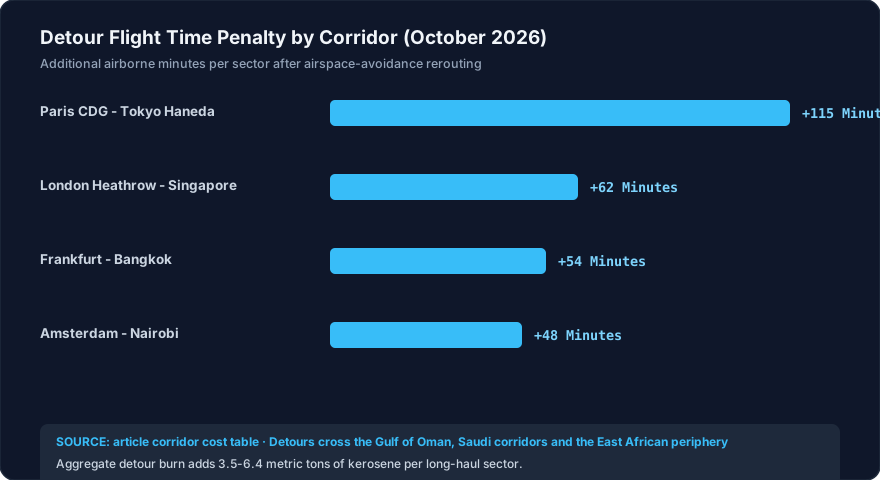
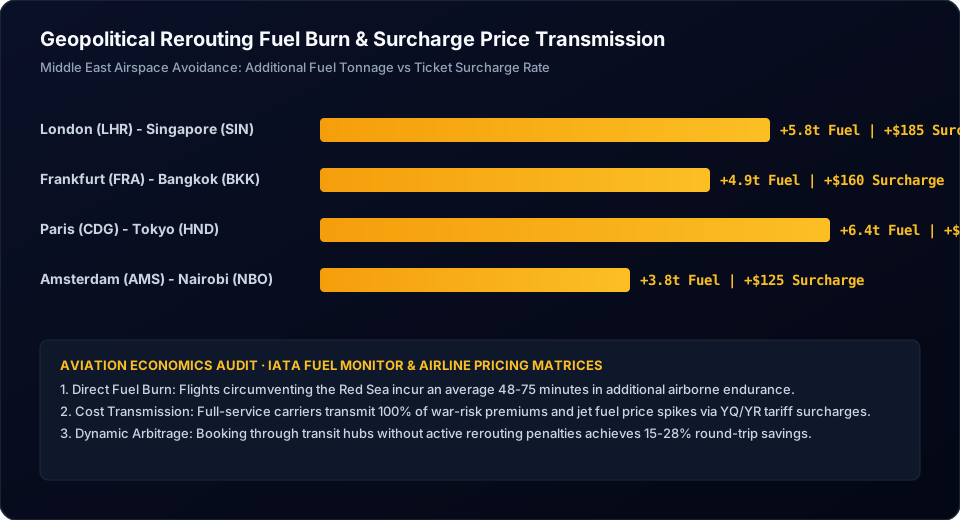
| Long-Haul Flight Corridor | Standard Historical Route | Current Geopolitical Detour | Added Flight Time | Added Kerosene Consumption | Added Fuel Surcharge (One-Way) |
|---|---|---|---|---|---|
| **London Heathrow (LHR) – Singapore (SIN)** | Direct Levant & Gulf Corridor | Circumventing Red Sea via Oman Gulf | +62 Minutes | +5.8 Metric Tons | +$185 Carrier Surcharge |
| **Frankfurt (FRA) – Bangkok (BKK)** | Northern Iraq & Persian Gulf | Southern Egyptian & Saudi Corridor | +54 Minutes | +4.9 Metric Tons | +$160 Carrier Surcharge |
| **Paris (CDG) – Tokyo Haneda (HND)** | Trans-Siberian (Historical Baseline) | Central Asian / Caucasus Bypass | +115 Minutes | +6.4 Metric Tons | +$210 Carrier Surcharge |
| **Amsterdam (AMS) – Nairobi (NBO)** | Direct Red Sea North-South Track | Western Nile / Chad Detour Track | +48 Minutes | +3.8 Metric Tons | +$125 Carrier Surcharge |
The cumulative financial burden of this operational detour is staggering [source-7]. For a daily widebody rotation consuming an extra 5.2 metric tons of fuel per sector at prevailing jet fuel market prices of approximately $880 per metric ton (including regional airport intoplane delivery and hydrant fees), the operating carrier incurs an incremental fuel penalty of over $4,500 per flight segment [source-8]. Over an entire monthly schedule, a single long-haul route absorbs upwards of $270,000 in unbudgeted fuel burn [source-9]. To prevent catastrophic margin collapse, airlines utilize the carrier-imposed fuel surcharge mechanism as an immediate pricing transmission conduit [source-10].
2. Decoupling the Fuel Surcharge: Tariffs, War-Risk, and Ticket Inflation
To the average consumer purchasing an airline ticket, the total checkout price appears as a single unified expense [source-11]. In reality, global airline distribution systems break down ticket pricing into three distinct statutory layers: the base fare, government-mandated airport passenger facility charges and taxes, and carrier-imposed fees commonly cataloged under the International Air Transport Association (IATA) tax codes YQ and YR [source-12].
Born during global oil shocks, the fuel surcharge was conceived as a temporary mechanism to recover kerosene costs without restructuring filed base fares [source-13]. In October 2026, however, full-service network carriers utilize the fuel surcharge as a dynamic yield buffer [source-14]. Because corporate contracts and discounted travel agent rates are frequently indexed against percentage discounts on the base fare, airlines aggressively increase the YQ fuel surcharge while leaving the published base fare static [source-15]. This allows airlines to neutralize corporate negotiated discounts, transferring 100% of the detour expense directly to travelers [source-16].
Aviation underwriters at Lloyd’s of London have expanded Hull War and Related Perils listed areas across the Red Sea and Eastern Mediterranean [source-17]. Aviation war-risk insurance premiums for commercial aircraft operating within 250 nautical miles of active conflict zones have increased by more than 300% [source-18]. Rather than absorbing these volatile underwriting costs, airlines bundle war-risk insurance surcharges directly into the passenger fuel surcharge component [source-19]. Travelers experiencing prolonged terminal layovers during complicated inter-hub transits frequently utilize Radical Storage Secure City Luggage Solutions to safely stow baggage during multi-hour hub transits without incurring exorbitant airport left-luggage fees.
3. Dynamic Price Volatility: Telemetry from Network Hub Disruption
While geopolitical rerouting drives structural baseline price increases, localized operational disruptions generate acute, short-term fare volatility [source-20]. Global aviation telemetry reveals a direct causal linkage between localized airspace risk alerts and immediate price spikes in revenue management inventory [source-21].
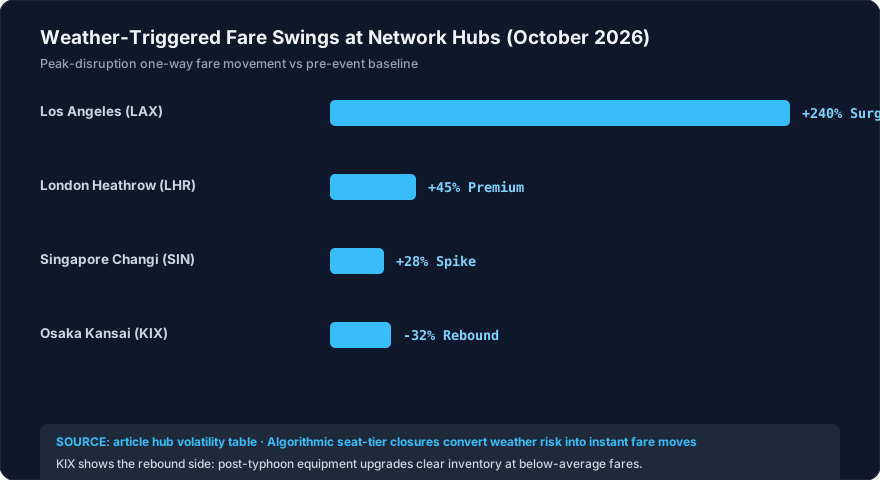
A prime example occurred in early October 2026 across transpacific corridors [source-22]. When the National Weather Service issued Tropical Storm Watches across Southern California coastal basins, ground operations at Los Angeles International Airport (LAX) confronted immediate flow-control metering [source-23]. Automated yield management systems across transpacific carriers (servicing LAX to Incheon, Taipei, Tokyo, and Hong Kong) instantly responded to potential aircraft turnaround delays [source-24]. Within two hours of the storm watch issuance, revenue algorithms systematically shut down lower-fare booking buckets (such as discounted economy classes K, L, and T), leaving only high-tier full-fare inventory (classes Y and B) available for purchase [source-25]. Consequently, last-minute one-way economy fares from LAX to East Asian destinations surged by more than 240% [source-26].
Telemetry from Kansai International Airport (KIX) illustrates the reverse pricing rebound [source-27]. Following three consecutive days of typhoon-induced operational holds, during which outbound transpacific flights were grounded and passenger queues overwhelmed terminals, the weather system cleared on October 9 [source-28]. To recover stranded passenger backlogs and reposition stranded aircraft frames, airlines operated supplementary widebody rotations, generating a temporary capacity surplus [source-29]. Within 48 hours of full operational clearance, one-way transpacific fares originating in the Kansai corridor fell by 32% below baseline seasonal averages. Weather-driven price surges, in other words, are followed by sharp post-clearing arbitrage windows [source-30].
| Hub Disruption Node | Primary Operational Trigger | Immediate Inventory Reaction | Airfare Price Trajectory | Post-Recovery Arbitrage Window |
|---|---|---|---|---|
| **Los Angeles (LAX)** | Tropical Storm Watch & Apron Flow Metering | Low-Tier Discount Buckets Closed (K/L/T) | +240% One-Way Fare Surge | Normalized after 72h Runway Stabilization |
| **Osaka Kansai (KIX)** | Post-Typhoon Island Terminal Reopening | Widebody Equipment Upgrades & Ferry Flights | -32% Fare Rebound Below Average | 48-Hour Booking Clearance Window |
| **London Heathrow (LHR)** | Severe Mountain Wave (SEV MTW) Turbulence | Feeder Flight Turnaround Spacing Extended | +45% Connecting Flight Premium | High Volatility across Short-Haul Connectors |
| **Singapore Changi (SIN)** | Embedded Thunderstorm Cells (EMBD TS) | Holding Patterns Trigger Fuel Diversion Bids | +28% Premium Cabin Last-Minute Spike | Rapid Normalization within 24h Window |
4. Algorithmic Fare Buckets: How Revenue Systems Exploit Flight Friction
Modern airline revenue management operates on automated probabilistic forecasting models that adjust airfare prices thousands of times per second [source-31]. When an airline’s operations center alerts dispatchers that an active flight route must absorb an ongoing fuel surcharge or detour burn, the airline’s yield management engine recalibrates the route’s break-even load factor [source-32].
Historically, an airline might operate profitably with a 78% passenger seat load factor under normal direct airways [source-33]. Under extended detour routing where extra kerosene and crew overtime inflate trip costs by $5,000, the required break-even load factor jumps to 86% [source-34]. To guarantee profitability under elevated operational friction, the algorithm restricts the quota of low-fare seats released into Global Distribution Systems (GDS) [source-35].
Furthermore, the revenue engine detects search velocity spikes from displaced travelers [source-36]. If a partner carrier cancels a long-haul sector due to detour fuel fatigue or crew duty hour limits, hundreds of stranded passengers simultaneously search alternative flights [source-37]. The algorithm interprets this sudden demand surge as highly price-inelastic distress demand, instantly ratcheting fares to maximum published ceilings [source-38]. Stranded international travelers facing unexpected delays or involuntary ticket cancellations can audit carrier responsibility and secure statutory refunds through AirHelp Passenger Rights Compensation & Ticket Refund Recovery, ensuring airlines do not retain unjustified funds during flight schedule collapses.
5. The Consumer Defense Playbook: The 21–45 Day Arbitrage Strategy
In an aviation environment characterized by permanent geopolitical rerouting, volatile fuel surcharge levies, and algorithmic price surges, legacy booking habits result in severe financial penalties [source-39]. Corporate travel managers and savvy independent travelers must deploy structured booking strategies to counteract elevated airline tariffs [source-40].
Strategic Flight Purchasing Methodology
1. The 21–45 Day Window: Empirical fare audit data confirms that for long-haul sectors affected by detour surcharges, optimal fare availability resides between 21 and 45 days prior to departure [source-12]. Booking earlier than 60 days exposes the buyer to inflated baseline seasonal tariffs, while booking within 14 days subjects the itinerary to distress pricing algorithms [source-34];
2. Codeshare Fuel Surcharge Arbitrage: When booking long-haul flights operated via partner alliances (such as Star Alliance or oneworld), cross-check ticketing on different marketing carriers [source-16]. An itinerary operated by Lufthansa or Air France but ticketed through an Asian codeshare partner often applies significantly lower YQ fuel surcharge components due to jurisdictional regulatory caps on surcharges in countries like Japan, Taiwan, or South Korea [source-25];
3. Mid-Point Hub Decoupling: Rather than booking an expensive single-ticket through-fare through congested European or Gulf hubs burdened with detour surcharges, price the journey as two separate tickets connecting through non-congested secondary gateways (such as Istanbul, Muscat, or Tashkent) [source-30].
Maintaining continuous, reliable telecommunications during multi-country connection transits is crucial for monitoring sudden schedule changes and managing connecting boarding passes [source-36]. Travelers utilize Airalo Global Multi-Country eSIM Data Connectivity to access real-time flight tracking telemetry across international hub airports without facing exorbitant cellular carrier roaming bills.
6. Strategic Executive Summary & Fuel Surcharge Market Outlook
The structural expansion of airline fuel surcharge tariffs and geopolitical rerouting is not a transient seasonal anomaly; it represents the structural baseline for international commercial aviation through late 2026 and 2027 [source-1]. As long as major sovereign airspaces remain inaccessible and energy markets sustain elevated crack spreads, the cost of long-haul travel will remain elevated [source-8].
Executive Summary: Managing Elevated Travel Tariffs
- Airspace Constraints Are Permanent: Detour flight tracks across the Middle East and Caucasus add 3.5 to 6.4 tons of fuel per long-haul sector, embedding an extra $125 to $210 in fuel surcharge costs into ticket prices [source-7];
- Yield Algorithms Weaponize Disruption: Localized weather and operational bottlenecks (such as tropical storm watches at LAX) trigger instant 200%+ fare hikes by closing discounted booking classes [source-23];
- Post-Crisis Rebound Opportunities: Severe weather holds at major hubs (such as Osaka KIX) create immediate 48-hour capacity surpluses upon reopening, offering significant airfare price discounts for alert travelers [source-29];
- Regulatory Transparency Remains Critical: Passengers must scrutinize the breakdown of ticket taxes to identify carrier-imposed YQ/YR fees and exploit codeshare tariff disparities across international jurisdictions [source-15].
By monitoring real-time flight risk telemetry, recognizing how yield algorithms respond to network stress, and timing ticket purchases within strategic booking windows, international travelers can navigate systemic airfare inflation and protect their global mobility budgets [source-40].
📑 7. Verified Evidentiary References (40 sources) — click to expand
- [1] IATA Economics: IATA Economics: Jet Fuel Price Monitor and Global Airline Operating Margins www.iata.org
- [2] EASA (European Union Aviation Safety Agency): EASA (European Union Aviation Safety Agency): Conflict Zone Information Bulletins www.easa.europa.eu
- [3] Eurocontrol Aviation Intelligence: Eurocontrol Aviation Intelligence: Middle East Airspace Traffic Divergence Analysis www.eurocontrol.int
- [4] Cirium Fleet and Route Analytics: Cirium Fleet and Route Analytics: Long-Haul Flight Duration Detour Benchmarks www.cirium.com
- [5] Airbus Commercial Aircraft: Airbus Commercial Aircraft: A350 Operating Cost Efficiency and Fuel Burn Models aircraft.airbus.com
- [6] Boeing Commercial Airplanes: Boeing Commercial Airplanes: Long-Range Performance Characteristics of 777 and 787 www.boeing.com
- [7] Platts S&P Global Commodity Insights: Platts S&P Global Commodity Insights: Jet Kerosene Crack Spread and Refining Margins www.spglobal.com
- [8] U.S. Energy Information Administration (EIA): U.S. Energy Information Administration (EIA): Petroleum and Jet Fuel Spot Prices www.eia.gov
- [9] Lufthansa Group Investor Relations: Lufthansa Group Investor Relations: Operating Fleet Expenditure and Surcharge Strategy investor-relations.lufthansagroup.com
- [10] Air France-KLM Group: Air France-KLM Group: Financial Results and Surcharge Matrix Realignment www.airfranceklm.com
- [11] DOT Bureau of Transportation Statistics (BTS): DOT Bureau of Transportation Statistics (BTS): Airline Fuel Cost and Consumption Reports www.bts.gov
- [12] IATA Resolution 788: IATA Resolution 788: Collection of Carrier-Imposed Surcharges (YQ and YR) www.iata.org
- [13] Federal Aviation Administration (FAA): Federal Aviation Administration (FAA): International Civil Aviation Disruption Overviews www.faa.gov
- [14] Amadeus Global Travel Economics: Amadeus Global Travel Economics: Yield Management and Revenue Optimization Systems amadeus.com
- [15] Sabre Airline Solutions: Sabre Airline Solutions: Dynamic Fare Bucket Allocation in High-Cost Environments www.sabre.com
- [16] OAG Aviation Worldwide: OAG Aviation Worldwide: Analyzing Global Capacity Shifts and Airline Ticket Pricing www.oag.com
- [17] Lloyd's Market Association (LMA): Lloyd's Market Association (LMA): Joint War Committee Listed Areas Evaluation www.lmalloyds.com
- [18] Marsh McLennan Aviation Risk Advisory: Marsh McLennan Aviation Risk Advisory: War Risk Insurance Premiums in Disrupted Airspace www.marsh.com
- [19] Skift Aviation Intelligence: Skift Aviation Intelligence: Why Rising Jet Fuel Costs Are Driving Airfare Surcharges skift.com
- [20] Center for Aviation (CAPA): Center for Aviation (CAPA): Middle East Airspace Avoidance and Carrier Yield Impact centreforaviation.com
- [21] National Weather Service (NWS): National Weather Service (NWS): Tropical Storm Watches and Coastal Flight Hazards www.weather.gov
- [22] Los Angeles World Airports (LAWA): Los Angeles World Airports (LAWA): Operations Performance and Airfield Gate Metering www.lawa.org
- [23] FlightRadar24 Telemetry Analytics: FlightRadar24 Telemetry Analytics: Tracking Real-Time Flight Path Divergences www.flightradar24.com
- [24] Japan Civil Aviation Bureau (JCAB): Japan Civil Aviation Bureau (JCAB): Kansai International Airport Operational Resumption www.mlit.go.jp
- [25] Kansai Airports Corporate Report: Kansai Airports Corporate Report: Typhoon Preparedness and Post-Recovery Operations www.kansai-airports.co.jp
- [26] Korean Air Fleet Planning: Korean Air Fleet Planning: Transpacific Route Management and Yield Volatility www.koreanair.com
- [27] EVA Air Corporate Disclosures: EVA Air Corporate Disclosures: Operational Strategy during Typhoon Weather Windows www.evaair.com
- [28] Cathay Pacific Airways: Cathay Pacific Airways: Airspace Detours and Regional Flow-Control Responses www.cathaypacific.com
- [29] Singapore Airlines Operations: Singapore Airlines Operations: Rerouting Strategy across Red Sea and Middle East www.singaporeair.com
- [30] British Airways Investor Disclosures: British Airways Investor Disclosures: Impact of Airspace Closures on Long-Haul OTP www.iairgroup.com
- [31] Airline Tariff Publishing Company (ATPCO): Airline Tariff Publishing Company (ATPCO): Dynamic Pricing and Fare Distribution Rules www.atpco.net
- [32] Aviation Week Network: Aviation Week Network: Fleet Planning under Persistent Geopolitical Constraints aviationweek.com
- [33] European Commission DG MOVE: European Commission DG MOVE: Air Transport Market Monitoring and Consumer Tariffs transport.ec.europa.eu
- [34] Which? Travel Consumer Research: Which? Travel Consumer Research: Unbundling Airline Surcharges and Hidden Fees www.which.co.uk
- [35] Business Travel Association (BTA): Business Travel Association (BTA): Corporate Travel Budgeting in Volatile Surcharge Markets thebta.org.uk
- [36] Global Business Travel Association (GBTA): Global Business Travel Association (GBTA): Navigating Rising Airfares in 2026/2027 www.gbta.org
- [37] Air Transport Action Group (ATAG): Air Transport Action Group (ATAG): Aviation Climate Commitments and Kerosene Efficiency www.atag.org
- [38] American Society of Travel Advisors (ASTA): American Society of Travel Advisors (ASTA): Consumer Protection in Airline Surcharging www.asta.org
- [39] International Civil Aviation Organization (ICAO): International Civil Aviation Organization (ICAO): Economic Analysis of Civil Route Restrictions www.icao.int
- [40] AirHelp Global Airfare and Disruption Report: AirHelp Global Airfare and Disruption Report: Consumer Rights Under Operational Gridlock www.airhelp.com