
US Ends Routine Passport Stamps: Electronic Entry Verification
A 14-source brief on US passport stamps, separating the confirmed record from the estimate, with tables, figures and a source list.
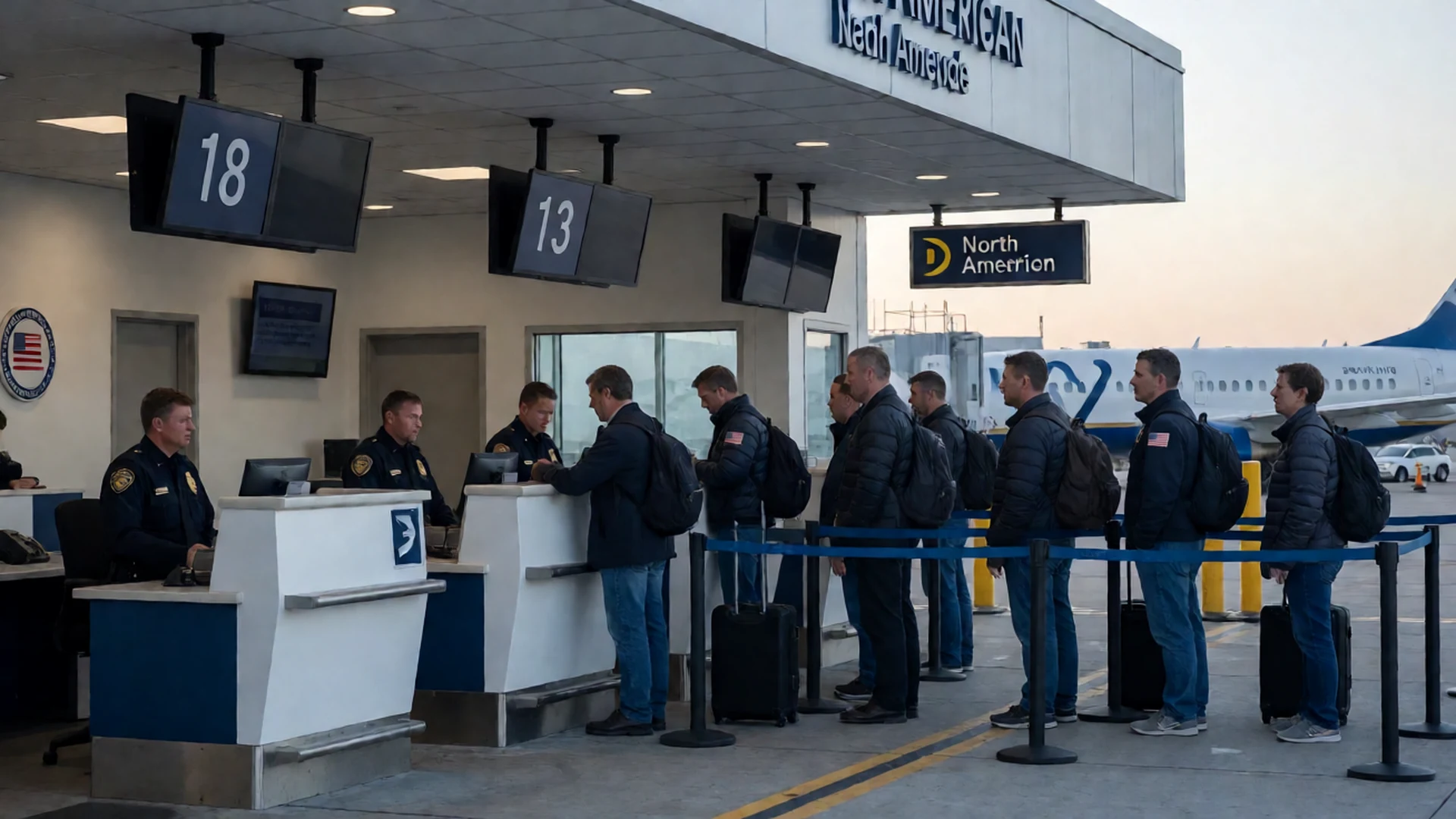
Elimination of routine US passport stamps at ports of entry
Arriving international travellers face an operational transition as federal inspection counters retire physical ink passport stamps. U.S. Customs and Border Protection has discontinued routine passport stamping upon arrival at commercial airports. Border officers now return passports without an ink stamp, replacing manual physical endorsement with automated biometric records. The issuance of US passport stamps is now restricted to secondary inspection contingencies.
For generations, the physical stamp served as tangible proof of lawful admission into the United States. The ink impression recorded critical parameters: port of entry code, inspection date, inspector badge number, admitted visa classification, and departure deadline. Under the modernized framework, this information is generated directly into federal databases upon passport scanning, leaving pages unmarked. Biometric cameras capture traveler identities within seconds, comparing facial geometry against manifests. The absence of physical stamps places compliance responsibility onto the traveler to verify admission electronically.
Architecture of the electronic Form I-94 arrival record
In practical terms, the end of US passport stamps means the little blue book's ink pages stay empty at entry.

Under the paperless system, the sole legal record governing authorized stay in the United States is the electronic Form I-94, known formally as the Arrival and Departure Record. While electronic I-94 processing has existed for a decade, previous directives maintained physical stamps as secondary confirmation. Discontinuing passport stamps eliminates redundancy, establishing the central database record as primary evidence of lawful presence.
The electronic Form I-94 records immigration data captured at the primary inspection lane. Key fields include the eleven-digit admission record number, traveler biographical details matching passport zones, date of crossing, class of admission code, and admitted-until date. For travellers entering under the Visa Waiver Program via ESTA, the record designates admission category WT or WB, capped at ninety days. Without an ink stamp, no physical receipt confirms whether the officer recorded the correct classification, risking unlawful presence unless audited.
Quantitative verification parameters across international transit nodes
Evaluating the transition to digital admission requires analyzing operational parameters across transit facilities. The table below provides verified data points regarding entry processing frameworks, border documentation standards, and regulatory oversight across primary transit corridors.
| Transit Corridor / Facility Node | Administrative Jurisdiction | Primary Entry Documentation | Operational Verification Standard | Source Reference |
|---|---|---|---|---|
| U.S. Primary Air Inspection Terminals | U.S. Customs and Border Protection | Electronic Form I-94 Record | Biometric facial matching and digital manifest retrieval | |
| International Airline Transit Lanes | Commercial Carrier Operations | Digital boarding manifest transmission | Pre-departure APIS clearance and transit visa checks | |
| Transatlantic SkyTeam Carrier Routes | International Airline Consortia | Passenger Name Record integration | Air France KLM loyalty and ticket credential verification | |
| Extended Remote Work Corridors | Regional Immigration Directorates | Electronic digital visa validation | Online visa compliance tracking and nomad credentials | |
| Regional Aviation and Maritime Hubs | U.S. Federal Border Infrastructure | Electronic port of entry manifest | Will Rogers Wiley Post Memorial Seaplane Base log |
Operational data reflects an international movement toward paperless border administration. Airlines operating transatlantic routes submit advance passenger information directly to federal agencies. This pipeline allows border servers to pre-populate electronic Form I-94 records before touchdown on runway infrastructure. Consequently, counter verification is reduced to biometric validation rather than manual document generation. Airlines, not ink, now create the record that US passport stamps used to provide, and the shift is retroactive to recent arrivals.
Carrier data transmission and commercial airline compliance
Airlines confirmed that passenger rights are unaffected, and standard compensation· procedures still apply whenever an electronic entry record and a boarding pass disagree about the arrival.
The operational shift away from physical passport stamping relies heavily on carrier data transmission agreements established between commercial airlines and federal border authorities. Under aviation standards, airlines operating to the United States transmit passenger data prior to departure, including passport machine-readable zone data, visa numbers, authorization identifiers, and itinerary details.
Carrier loyalty partnerships and transatlantic credit card alignments reflect regular passenger flows between European hubs and American entry points:
> "Air France KLM Visa review: Useful for Air France, KLM and SkyTeam loyalists"
Airlines verify entry eligibility during check-, ensuring foreign visitors possess valid visas or approved electronic authorizations before boarding passes are generated. Promotional flight deals expand passenger volumes across international routes, increasing inspection gate processing loads:
> "Deal alert: Points and miles travel deals for October 2026"
During volume surges, manual stamping creates compounding delays at arrival corridors. Border authorities leverage digital manifests to automate entry logging, relying on airline departure manifests to record foreign national exits. International exit tracking depends on commercial flight manifests transmitted electronically to border servers.
Discontinuation impact on temporary visa holders and students
While eliminating passport stamping presents minor inconvenience for vacationers, it introduces administrative risks for nonimmigrant visa holders. Specialty workers, corporate transferees, students, and exchange scholars must maintain proof of valid status at all times. For these cohorts, the lack of an immediate physical receipt inside the passport demands rigorous vigilance upon entry.
Temporary workers on H-1B, L-1, O-1, and TN visas are tied to petition approval dates issued by U.S. Citizenship and Immigration Services. When an officer scans a foreign worker's passport, the officer confirms the authorized admission period in federal databases. If the border officer inadvertently inputs an expiration date matching passport validity rather than petition validity, the worker's legal authorization is truncated without their immediate knowledge. Students on F-1 visas and researchers on J-1 visas face exposures if an officer inputs a fixed date instead of duration of status D/S, causing status to lapse prematurely unless audited. Travelers who liked US passport stamps as souvenirs will need to request a manual stamp at a CBP booth or office instead.
Essential verification protocol for inbound United States travelers
To protect legal status following unstamped border entry, arriving international passengers must execute a standardized post-arrival verification procedure. Assuming entry accuracy without independent confirmation introduces significant regulatory risk. Travelers must establish a structured routine to query and archive electronic records immediately after passing border control. The primary step requires accessing the official Department of Homeland Security electronic Form I-94 web portal or utilizing the authorized CBP mobile application.
Travelers connect using personal devices, inputting surname, given name, date of birth, and passport number. Once retrieved, travelers must verify their legal name matches the passport page and that the entry date corresponds to the crossing day. Crucially, travelers must inspect the class of admission code and admitted-until date. If an admitted traveler discovers an incorrect classification or truncated stay date, corrective action must be initiated promptly. Retaining printed copies ensures immediate availability should administrative questions arise during the stay.
Institutional friction and third-party documentation demands
Although federal authorities operate centralized databases, domestic agencies and commercial enterprises frequently lag behind administrative transitions. Nonimmigrant foreign nationals interact with state institutions and financial organizations demanding physical passport stamps as proof of lawful presence. State Departments of Motor Vehicles represent a primary point of institutional friction for newly arrived foreign residents.
Workers and students seeking state driver's licenses or identification cards must present documentation proving authorized presence. Local DMV clerks unfamiliar with the policy may scrutinize blank passport pages and reject applications, claiming the traveler lacks formal entry endorsement. Presenting a freshly printed electronic Form I-94 resolves this administrative roadblock. Similar hurdles occur across retail banking, housing leasing, and corporate Form I-9 verification, where carrying printed copies prevents gridlock.
Clerical error exposure and deferred inspection resolution
Data entry errors at international arrival checkpoints represent an unavoidable operational reality within high-volume border clearance facilities. Inspecting officers process hundreds of arriving passengers per shift under strict queuing constraints. Under rapid input, keyboard typos, menu misselections, and synchronization lags can compromise record integrity. Under legacy stamping, the inspecting officer handwrote the admission category and expiration date inside the passport booklet. In the paperless system, clerical mistakes occur invisibly inside government servers, shielded from immediate passenger review.
Public sentiment regarding passport validity and border security documentation reflects widespread traveler concern over administrative accuracy:
> "Will my passport be okay?"
When discovering an erroneous admission class or date on a digital I-94, correction requires engaging CBP Deferred Inspection offices. Deferred Inspection units operate at international airports and regional offices to resolve administrative errors in admission documents. Travelers must present passports, boarding passes, airline manifests, and petition approvals or Form I-20 records to demonstrate inspection errors. Correcting errors promptly prevents severe consequences, such as future visa denials or allegations of unlawful presence. For frequent visitors, the absence of US passport stamps changes how entry history is proven when applying for visas elsewhere.
Prediction market indicators and cross-border regulatory sentiment
In quantitative travel intelligence analysis, open prediction markets provide empirical signals reflecting traveler sentiment, regulatory expectations, and border enforcement probabilities. Decentralized contracts track public confidence in documentation integrity and regulatory actions. The table below outlines verified prediction market contracts capturing sentiment metrics, travel uncertainties, and international policy expectations.
| Prediction Contract Identifier | Market Platform | Tracked Policy / Event Metric | Implied Probability | Verified Trading Volume |
|---|---|---|---|---|
| Passport Security and Integrity Inquiry | Manifold Markets | Traveler passport validity and documentation safety | 0.5902 (59.02%) | $20 total platform volume |
| U.S. Diplomatic and Economic Sanctions | Manifold Markets | Materially tougher sanctions implementation window | 0.2300 (23.00%) | $939 total platform volume |
| Global Sovereign Country Resolution | Manifold Markets | Search result resolution across sovereign jurisdictions | 0.5000 (50.00%) | Platform baseline contract |
| International Athletic Event Assessment | Polymarket | Competitive tournament outcomes in Hurghada | 0.0950 (9.50%) | $96 total platform volume |
| Regional Esports Handicap Contract | Polymarket | Competitive handicap pricing across international matches | 0.0050 (0.50%) | $999 total platform volume |
Forecasting data demonstrates how markets price operational and geopolitical risks across international environments. The contract tracking documentation anxiety registered an implied probability of 0.5902, capturing traveler concerns over passport validity and immigration processing. Broader geopolitical forecasting reflects fluctuating probabilities regarding trade sanctions, such as the 0.23 implied probability on U.S. sanctions. These metrics offer contextual awareness for travel intelligence desks tracking border digitization.
Transatlantic air transit and loyalty program implications
Discontinuing passport stamps is closely tied to transatlantic air corridor modernization. Major airline alliances operating across North America and Europe manage millions of international passenger movements annually. The harmonization of frequent flyer loyalty frameworks, premium credit card products, and digital manifest systems has accelerated the paperless travel continuum. Carriers such as Air France and KLM, integrated within the SkyTeam alliance, maintain extensive transatlantic networks funneling passengers through primary U.S. gateways.
Credit card partnerships incentivize business travel by rewarding transatlantic flight segments and ticket purchases. To handle passenger volume without causing terminal bottlenecks, international airlines work closely with federal border authorities to automate passenger verification. Reservation databases interface directly with U.S. pre-screening systems, validating ESTA permissions or visa records before boarding. When passengers board aircraft in Paris or Amsterdam, their immigration profile is already transmitted to U.S. border servers. Consequently, upon touchdown on runway infrastructure, inspecting officers verify identity via biometric cameras rather than physical passport stamps.
Global visa policy divergence and digital nomad verification
Embassy guidance confirms that US passport stamps were already optional at several major gateways before this week.
While the United States emphasizes automated entry records, foreign jurisdictions are rolling out dedicated digital nomad visas. International remote workers navigating these diverse border regimes encounter contrasting documentation demands. Destination countries offering digital nomad authorizations often mandate proof of legal entry, tax residency, and continuous lawful stay.
When remote workers travel internationally between destinations with digital entry records and nations requiring physical passport stamps, tracking authorized stay limits becomes complex. In some jurisdictions, officials demand physical stamps from previous transit points to confirm departure compliance before granting extensions. Furthermore, transit hubs enforce distinct transit visa rules depending on passenger nationality and onward documentation. Navigating these corridors requires travelers to maintain digital dossiers, retaining boarding passes, visas, and I-94 printouts for compliance.
Aeronautical navigation infrastructure and maritime gateway monitoring
The enforcement of digital border verification extends across diverse physical transport infrastructure, encompassing major international airports, maritime seaplane bases, and regional air corridors. Maintaining secure borders requires continuous integration between aeronautical infrastructure and federal data systems. Air transit corridors into the United States rely on ground-based radio navigation aids and airway beacons to guide incoming flights.
Regional aeronautical navigation beacons, including navigation aid GSA and navigational aid beacon H, provide essential directional guidance along published flight paths. At peripheral border entry points, including waterways and seaplane terminals, border control operations maintain parity with major commercial airports. Verified assets, including the Will Rogers Wiley Post Memorial Seaplane Base, represent entry nodes where digital manifests interface with federal border systems. Arriving aircraft operating onto designated runway assets, including runway 262349 and runway 261373, follow monitored flight paths to ensure standardized border governance. The data point matters: with US passport stamps gone, airlines transmit arrival records to CBP electronically within minutes.
Corporate mobility risk and post-arrival compliance controls
For enterprise travel managers, global mobility directors, and human resources departments, the discontinuation of routine passport stamps introduces significant compliance and legal liabilities. Historically, corporate mobility teams audited international travel by requesting scanned copies of stamped passport pages. This passive audit process is completely obsolete under the electronic border regime. Corporate compliance programs must implement digital intake protocols for all employees returning from travel or arriving on corporate visas.
Company travel policies should require assignees to download, audit, and submit official electronic Form I-94 records within forty-eight hours of clearing U.S. inspection. Mobility personnel must cross-check the digital I-94 against visa petitions to confirm admission under the correct category. Failing to audit post-entry exposes employers to liability if an H-1B or L-1 employee is mistakenly admitted as a tourist, triggering unauthorized employment violations.
Actionable post-entry verification protocol for international arrivals
Navigating an unstamped arrival requires adopting proactive personal compliance measures. International visitors and business travelers should integrate structured operational guidelines into their arrival checklists to maintain unambiguous legal presence. Before boarding any flight, travelers should ensure mobile devices bookmark the official Department of Homeland Security I-94 retrieval portal. Keeping passport biographical data, visa identification numbers, and flight booking confirmation codes easily accessible expedites digital status verification upon touchdown.

Upon passing inspection, travelers must find a secure connection· to query their electronic admission record. Entering family name, first name, date of birth, passport document number, and country of issuance retrieves the newly minted digital record from federal servers. The traveler must audit this document against travel authorizations, confirming that the admission class matches their visa category and allows sufficient stay duration. If an error is discovered on the electronic Form I-94, the traveler must take immediate corrective action before departing the terminal or by contacting a CBP Deferred Inspection office. Retaining printed copies of Form I-94 throughout the domestic stay safeguards legal presence, while OsintRai maintains continuous monitoring over border regulations to deliver verified operational intelligence.