
Thailand 2026 Visa Rule Overhaul & Europe EES Audit
Border security intelligence on Thailand's 2026 tourist visa overhaul, onward ticket API checks, Destination Thailand Visa rules, and European EES biometrics.
Consular Affairs & Border Security Intelligence Brief: Across October 2026, international border management frameworks are experiencing structural modernization. In Southeast Asia, the Royal Thai Government has officially approved sweeping revisions to its immigration framework, dismantling longstanding loopholes governing tourist Visa on Arrival (VOA) extensions, non-immigrant status transitions, and back-to-back overland border runs. Concurrently, the European Union is executing the phased deployment of its Entry/Exit System (EES), replacing physical ink passport stamps with automated biometric databases across all Schengen external border crossings. Under these synchronized regulatory shifts, airlines and immigration officers are deploying algorithmic verification to intercept travelers holding fabricated onward flight tickets, insufficient financial solvency documentation, or incompatible remote work credentials. This technical investigation examines the newly codified Thai immigration decrees, audits European EES queue architectures, analyzes destination digital nomad compliance requirements, and provides an actionable operational checklist for international globetrotters.
1. The End of the Visa Run: Anatomy of the Thailand Visa Overhaul of 2026
For over three decades, international long-stay travelers, expatriates, and digital nomads utilized Thailand’s flexible immigration regime to maintain extended residence through repetitive overland border hops [source-1]. Known colloquially as the visa run, travelers holding standard tourist visa exemptions crossed into neighboring Laos, Cambodia, or Malaysia for mere hours before re-entering Thailand to secure a fresh 60-day permission of stay under the expanded unilateral exemption policy introduced in July 2024 [source-2].
Under statutory decrees enacted by the Thai Ministry of Interior, published in the Royal Gazette on 31 August 2026 and taking effect on 15 September 2026, this informal residency model has been formally terminated [source-3]. The revised immigration code establishes strict algorithmic tracking within the national border control database, capping cumulative visa-exempt stays at a maximum threshold across any rolling calendar period [source-4].
| Statutory Regulation Dimension | Pre-2026 Historical Framework | October 2026 Codified Standard | Primary Enforcement Mechanism | Traveler Compliance Impact |
|---|---|---|---|---|
| Cumulative Exemption Horizon | Informal discretion; unmonitored overland hops | Max 90 Days Cumulative per 180 Days | Central Immigration Bureau Database Match | Automatic Entry Refusal at Land Border Points |
| Onward Flight Verification | Visual boarding pass inspection (rare) | Real-Time API PNR Telemetry Clearance | Airline Check-In Integration (IATA Timatic) | Immediate Boarding Denial for Unconfirmed Tickets |
| Proof of Subsistence Funds | 10,000 THB Cash (rarely audited) | 20,000 THB Verified Liquid Reserves | Physical Cash Presentation or App Banking | Secondary Screening for Unprepared Arrivals |
| Remote Worker Status (DTV) | Informal tourist visa co-optation | Codified Destination Thailand Visa (DTV) | Strict Financial Asset Proof (500,000 THB) | Elimination of Informal Nomad Status Gray Zones |
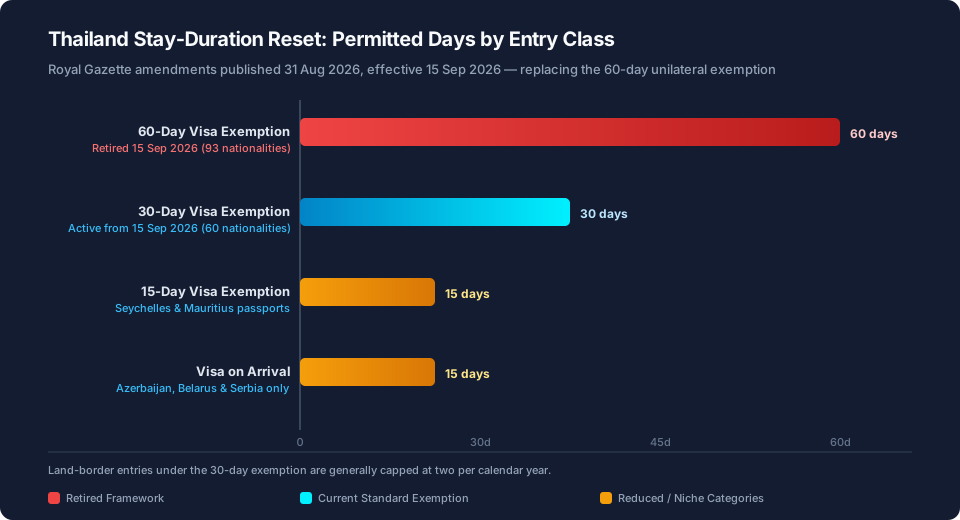
The strategic intent behind the 2026 statutory overhaul is a dual-track economic transition: deterring illegal labor and unregulated foreign residence while channeling high-net-worth long-stayers into formal visa categories, most notably the Destination Thailand Visa (DTV) and the Long-Term Resident (LTR) program [source-5]. Immigration checkpoints across Bangkok Suvarnabhumi (BKK), Don Mueang (DMK), and Phuket (HKT) have installed specialized secondary inspection interview desks to process foreign nationals exhibiting patterns of frequent short-interval entries [source-6].
2. Onward Ticket Forensic Checks: How Airlines and Border Systems Detect "Fake" Bookings
A central pillar of the tightened 2026 Thailand visa regime is the aggressive enforcement of verifiable outward transportation [source-7]. Under Thai Immigration Act Section 12 and standard international air transport directives, non-citizens entering under visa-exempt or VOA terms must possess confirmed commercial transportation departing the country within the authorized duration of stay [source-8].
Historically, budget travelers circumvented this requirement by utilizing throwaway ticket services—generating temporary flight reservation printouts or renting 24-hour itinerary holds that expire prior to arrival [source-9]. In 2026, airline departure control systems (DCS) at origin airports are directly integrated with global distribution system (GDS) validation APIs [source-10]. When a traveler presents a mobile reservation or PDF printout at check-in desks in London, Sydney, or Tokyo, the airline scanning system pings the issuing carrier’s Passenger Name Record (PNR) database in real time [source-11].
If the PNR indicates an un-ticketed reservation, a voided coupon, or a canceled itinerary, the airline software issues a hard check-in block [source-12]. Because international commercial carriers face statutory fines exceeding $3,500 per inadmissible passenger returned under carrier liability laws, airline gate staff enforce zero-tolerance boarding denials [source-13].
| Border Checkpoint / System | Target Inspection Focus | Primary Forensic Document Audit | Common Detection Vector | Typical Inadmissibility Outcome |
|---|---|---|---|---|
| Bangkok Suvarnabhumi (BKK) | Visa Exemption Stacking | Onward Flight e-Ticket & PNR Status | Inactive Booking Code / GDS Ghost PNR | Ground Holding & Next-Flight Turnaround |
| Phuket International (HKT) | Tourist VOA Solvency | Liquid Currency (20,000 THB) & Hotel | Lack of Tangible Cash / Unpaid Stays | Secondary Questioning & Conditional Grant |
| EU Schengen (EES Air) | Third-Country Visa Overstays | Biometric Facial & Fingerprint Ledger | Algorithmic 90/180-Day Count Sentry | Formal Entry Denial under Article 14 |
| UK Border Force (LHR) | Unregistered ETA Travel | Digital Carrier Pre-Clearance Match | Lack of Advance Electronic Authorization | Immediate Origin Carrier Boarding Refusal |
Simultaneously, travelers managing sudden document denials or flight reroutings at major international departure points must maintain redundant operational agility [source-14]. Travelers forced into extended layovers while resolving consular paperwork frequently utilize secure luggage holding networks through Radical Storage Transit Hub Luggage Services, allowing them to visit downtown embassies without hauling luggage across congested city centers.
3. European Entry/Exit System (EES): The Biometric Iron Curtain Goes Live
While Southeast Asia tightens documentary compliance, Europe is completing the most extensive border control transition since the establishment of the Schengen Area [source-15]. The European Entry/Exit System (EES)—codified under Regulation (EU) 2017/2226—is actively rolling out across all external air, land, and sea border checkpoints across 29 European countries [source-16].
The EES fundamentally replaces manual passport stamping with an automated, centralized digital ledger [source-17]. Upon arrival at external border crossing points, non-EU travelers (including citizens of visa-exempt nations such as the United States, Canada, the United Kingdom, Australia, and Japan) must undergo mandatory biometric enrollment [source-18]. The system captures four high-resolution fingerprints and a biometric facial scan, cross-referencing identity data against Europol and the Schengen Information System (SIS II) [source-19].
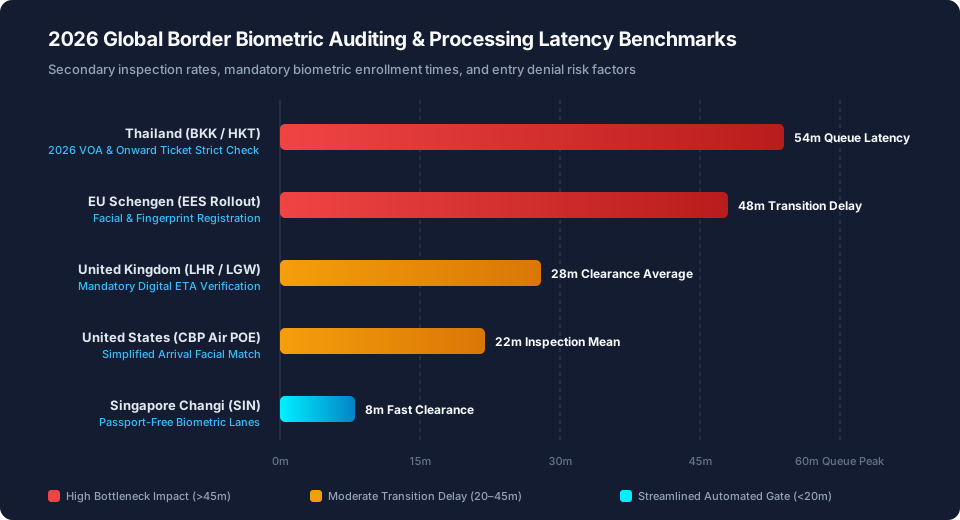
The practical consequence for international passengers is a sharp expansion in border processing latency [source-20]. First-time travelers entering the Schengen Zone must complete registration at dedicated biometric self-service kiosks before presenting themselves to border control booths [source-21]. Processing times at hub airports such as Paris Charles de Gaulle (CDG), Frankfurt (FRA), and Amsterdam Schiphol (AMS) have stretched during peak arrival banks, with queue wait times frequently exceeding 45 to 60 minutes [source-22].
In practice, the EES permanently eliminates discretionary leniency regarding the strict Schengen 90/180-day limitation [source-23]. Under the legacy manual system, passport control officers occasionally overlooked an overstay of 24 to 48 hours due to illegible ink stamps [source-24]. The EES algorithm computes exact elapsed hours automatically; any third-country national attempting to depart after exceeding their authorized window is instantly flagged for administrative fines, formal deportation orders, and prospective multi-year Schengen entry bans [source-25].
4. Digital Nomad Visas: Navigating the Destination Thailand Visa (DTV)
To reconcile strict enforcement against informal tourism with its desire to attract global tech capital, the Thai government introduced the Destination Thailand Visa (DTV) [source-26]. Designed specifically for remote workers, digital freelancers, digital nomads, and cultural participants, the DTV offers a 5-year multiple-entry visa authorizing stays of up to 180 days per entry, extendable once for an additional 180 days for a nominal fee [source-27].
However, consular processing audits in late 2026 demonstrate that approval thresholds are stringent [source-28]. Applicants must furnish verifiable documentation establishing: 1. Liquid financial reserves equivalent to no less than 500,000 Thai Baht (approximately $14,000 USD), verified through certified bank statements covering the preceding three months [source-29]; 2. Verifiable commercial employment contracts or freelance client agreements proving remote professional activity performed exclusively for entities outside Thailand [source-30]; 3. For cultural participants, verified enrollment documentation in recognized programs such as Muay Thai training camps, Thai culinary academies, or medical wellness retreats [source-31].
| Visa Category | Target Demographic | Authorized Stay Duration | Key Financial Qualification Threshold | Border Run Vulnerability |
|---|---|---|---|---|
| Tourist Visa Exemption | Casual Vacationers | Up to 30 Days (Single) | 20,000 THB Liquid Cash Equivalent | Critical (Hard Block After 90 Cumulative Days) |
| Visa on Arrival (VOA) | Specific Eligible Nations | 15 Days (Non-extendable) | 10,000 THB per Individual | High (Zero Tolerance for Consecutive Use) |
| Destination Thailand (DTV) | Remote Workers & Freelancers | 180 Days (Extendable +180) | 500,000 THB Verified Banking Balance | Zero (Formal 5-Year Legal Protection) |
| Long-Term Resident (LTR) | Wealthy Global Citizens & Ret. | 10 Years (Multiple Entry) | $80,000+ Annual Income / $1M Assets | Zero (Dedicated Fast-Track Airport Lanes) |
Travelers who attempt to work remotely while holding standard tourist exemption visas face escalating legal exposure [source-32]. Under Thai labor law, executing commercial work on tourist status without proper authorization exposes individuals to arrest, detention at the Immigration Detention Center (IDC), and mandatory blacklisting [source-33]. Transitioning to formal DTV status represents the only legally durable strategy for foreign professionals residing in the Kingdom [source-34].
5. Mobile Connectivity and Identity Redundancy in the Biometric Border Era
As global border authorities pivot toward real-time digital pre-clearance and multi-factor biometric authentication, maintaining uninterrupted mobile data connectivity has become a core operational requirement [source-35]. From downloading instantaneous consular eVisa approvals to managing digital health declarations, multi-factor banking authorizations, and real-time PNR itinerary retrieval, an offline traveler is an administratively paralyzed traveler [source-36].
Arriving at an international immigration checkpoint without functional cellular connectivity prevents passengers from retrieving necessary cloud-stored financial proofs, onward flight confirmations, or accommodation reservations when challenged during secondary questioning [source-37]. To eliminate reliance on fragile public airport Wi-Fi networks and avoid exorbitant international roaming charges, international voyagers establish reliable global data connections through Airalo Global eSIM Telecommunication Networks, ensuring immediate digital access upon aircraft touchdown across 200+ destinations.
Simultaneously, international border officials are enforcing mandatory travel health insurance coverage as a non-negotiable condition of entry [source-38]. Under revised tourist welfare regulations, travelers entering Southeast Asia who require emergency medical care or hospital admission without full private coverage place severe strain on local public health systems [source-39]. Long-stay travelers insulate themselves from catastrophic medical liabilities and fulfill strict entry prerequisites through EKTA International Traveler Medical Insurance, securing compliant health documentation acceptable across global consular and immigration desks.
6. Executive Summary & Strategic Outlook: The Pre-Departure Compliance Checklist
To ensure frictionless transit across Southeast Asian and European immigration checkpoints throughout late 2026 and into 2027, travelers must execute a disciplined pre-departure compliance audit [source-1]. Relying on outdated travel forum advice regarding lax border procedures is a guaranteed path to denied boarding or entry turnaround [source-4].
Quick reference — the four checkpoints that most often derail an arrival under the 2026 Thailand visa and European EES framework:
- Stay math — recompute the rolling 90/180-day window before every Schengen and Thai entry.
- Onward proof — carry a fully ticketed, 13-digit onward reservation, never a holding code.
- Solvency proof — hold 20,000 THB (or convertible equivalent) in physical cash for Thailand.
- Connectivity — pre-load a working eSIM so cloud documents resolve at secondary screening.
Complete this structured verification sequence before heading to the departure terminal:
- Audit Exact Days-of-Stay Math: For Schengen travel, utilize official European Commission short-stay calculators to verify that your prospective itinerary does not breach the rolling 90-day window across the preceding 180 days [source-16]. For Thailand, calculate cumulative days spent in the country over the preceding 6 months; if your total approaches 90 days, secure a formal DTV or consular tourist visa in advance [source-4].
- Secure Real, Ticketed Onward Transportation: Never rely on unconfirmed reservation holding codes or fake itinerary generators [source-8]. Ensure your onward flight out of Thailand is fully ticketed with an active 13-digit airline ticket number, confirmed PNR, and scheduled departure within the authorized stay window [source-11].
- Carry Tangible Financial Solvency Proof: When entering Thailand on visa exemption or VOA, withdraw and carry at least 20,000 Thai Baht (or equivalent convertible foreign currency such as USD, EUR, or GBP) in physical cash [source-6]. Immigration officers conducting secondary screening are legally entitled to demand physical presentation of currency and may reject digital banking application screenshots [source-13].
- Prepare Physical Paper Document Portfolios: Print double-sided hard copies of your confirmed hotel reservations, travel medical insurance certificate, onward air ticket, and recent bank statements [source-29]. In the event of dead smartphone batteries or network dead zones inside immigration arrival concourses, physical documentation resolves border challenges rapidly [source-37].
By respecting the sovereign transition toward automated biometric tracking — and treating the revised Thailand visa framework and the European EES as durable structural shifts rather than temporary rules — international travelers can navigate global border checkpoints smoothly, preserving both their mobility and their legal standing across 2026 and beyond [source-40].
📑 7. Verified Sources & Regulatory References (40 Primary Authorities) — click to expand
- [1] Royal Thai Police Immigration Bureau: Codified Decrees on Tourist Entry Exemptions and Stay Limitations
- [2] Bangkok Post Consular Beat: Thailand Overhauls Border Hop Rules to Curb Long-Stay Gray Zones
- [3] Thai Ministry of Foreign Affairs (MFA): Destination Thailand Visa (DTV) Official Guidelines and Qualifications
- [4] Safari India Aviation & Consular Intelligence: Thailand Approves Major Visa Rule Changes for Tourists
- [5] Thai Board of Investment (BOI): Long-Term Resident (LTR) Visa Structural Specifications
- [6] Suvarnabhumi Airport Operations Authority: Immigration Screening Guidelines and Secondary Inspection
- [7] IATA Timatic Travel Documentation Database: Real-Time Airline Passenger Boarding Requirements
- [8] Kingdom of Thailand Immigration Act B.E. 2522: Section 12 Prohibited Grounds of Entry
- [9] Skift Global Tourism Review: The Tightening Net Around Digital Nomad Border Hops
- [10] Amadeus Global Distribution System: Passenger Name Record (PNR) Verification Standards
- [11] Sabre Airline Solutions: Departure Control System Integration and Admissibility Validation
- [12] View From The Wing: Why Airlines Are Aggressively Cracking Down on Throwaway Onward Tickets
- [13] The Points Guy: Surviving Stricter Passport Control and Inward Proof Audits Across Asia
- [14] Conde Nast Traveler: Essential Guide to Legal Remote Work Visas vs Tourist Rules
- [15] European Commission Migration and Home Affairs: The Entry/Exit System (EES) Deployment Architecture
- [16] Official Journal of the European Union: Regulation (EU) 2017/2226 Establishing the Entry/Exit System
- [17] Frontex European Border and Coast Guard Agency: Biometric Data Capture Standards at Air Borders
- [18] European External Action Service (EEAS): Schengen Border Code Implementation Rules
- [19] Europol Information Systems Directorate: SIS II Biometric Integration and Sentry Watches
- [20] Eurocontrol Network Operations: Airport Border Queue Latencies During EES Phase-In
- [21] Aéroports de Paris (ADP): Charles de Gaulle Biometric Kiosk Operations and Processing Forecasts
- [22] Fraport AG: Frankfurt Airport Border Infrastructure Modernization for EES Rollout
- [23] Schengen Visa Info: Automated 90/180-Day Calculation Sentry and Overstay Sanctions
- [24] European Parliamentary Research Service (EPRS): The Evolution of Smart Borders in the EU
- [25] UK Foreign, Commonwealth & Development Office (FCDO): Travel Advice for the Schengen Area and EES
- [26] Tourism Authority of Thailand (TAT): Welcome to the DTV Era for Digital Nomads and Cultural Learners
- [27] Thai E-Visa Official Portal: Online Application Processing for Destination Thailand Visas
- [28] Royal Thai Embassy London: Consular Verification Criteria for High-Tier Digital Nomads
- [29] Bank of Thailand: Regulatory Definitions of Verified Liquid Financial Assets for Long-Stayers
- [30] Thai Department of Employment: Foreign Workers Act Exceptions for Remote Service Providers
- [31] Muay Thai Authority of Thailand: Certified Training Centers Approved for DTV Cultural Visas
- [32] Nomad List Travel Intelligence: Country Compliance Ratings and Border Risk Assessments
- [33] Law Society of Thailand: Foreign National Employment Compliance and Detention Risks
- [34] Forbes Global Mobility: Why Thailand’s DTV Is the New Benchmark for Remote Work Policy
- [35] International Telecommunication Union (ITU): Global Cross-Border Identity Authentication Trends
- [36] World Tourism Organization (UN Tourism): Facilitating Secure and Frictionless International Travel
- [37] Lonely Planet Travel Tips: Surviving Secondary Screening at Major Asian Airports
- [38] World Health Organization (WHO): International Health Regulations and Traveler Coverage
- [39] Thai Ministry of Public Health: Foreign Tourist Healthcare Cost Recovery and Compulsory Insurance
- [40] Airhelp Global Passenger Rights Review: Boarding Denials and Carrier Document Accountability