Summary
Iraq sits under a U.S. State Department Level 4 'do not travel' advisory and an FAA Special Federal Aviation Regulation plus NOTAM covering its airspace. The practical exposure is not only travellers flying to Baghdad or Erbil: any connecting itinerary whose path crosses the Baghdad flight information region — including diversions and fuel stops — can enter the restricted corridor, where a re-route burns fuel and breaks onward connections.
Data Snapshot


Desk heat scores for 13 October 2026: the global travel-advisory track and the Iraq and Iran advisories sit within one point of each other, all flagged at the top of the risk board.
Boarding Desk Interceptions and the Baghdad FIR Overflight Reality
At an international departure gate in Doha or Istanbul, an intercontinental traveller hands a boarding pass to the gate agent for a connecting flight to Europe, unaware of the navigational waypoints entered into the aircraft flight management computer [source-2]. For most passengers, the official Iraq travel advisory Level 4 alert exists as an abstract warning intended solely for contractors or aid workers travelling directly to Baghdad and Erbil [source-1]. Airline reservation engines present flight schedules while concealing the physical airspace corridors traversed at cruising altitude, creating an operational blind spot in flight planning [source-2][source-7].
While leisure passengers rarely book tickets to destinations facing active armed conflict warnings, global airline networks regularly guide civilian aircraft directly through volatile corridors [source-2]. Under the advisory framework maintained by the U.S. Department of State, an active Iraq travel advisory Level 4 designation alerts travellers to pervasive dangers on the ground, citing terrorism, kidnapping, armed conflict, and civil unrest [source-1]. Yet an itinerary that never touches Iraqi soil can still enter this hazard perimeter if an unexpected mechanical emergency forces an unscheduled landing into Iraqi airspace [source-1][source-2].
Operational monitoring at OsintRai documents this exposure daily [source-7]. On the risk watch board for October 13, 2026, the risk heat score for Iraq stands between 69.5 and 79.0, driven by regular advisory updates, ground security volatility, and persistent regional airspace chatter [source-7]. Understanding an Iraq travel advisory Level 4 alert requires looking beyond airport flight monitors and examining the airspace directives governing the skies above [source-1][source-2].
The FAA SFAR and NOTAM Mandates Over Iraqi Airspace
The regulatory line between routine commercial aviation and active conflict zones is established by formal government flight restrictions [source-2]. In response to severe flight risks throughout the region, the Federal Aviation Administration (FAA) maintains strict prohibitions governing civil aircraft operating in Middle Eastern corridors [source-2].
"The Federal Aviation Administration (FAA) has issued a Notice to Airmen (NOTAM) and a Special Federal Aviation Regulation (SFAR) due to risks to civil aviation operating within or in the vicinity of Iraq." [source-2]
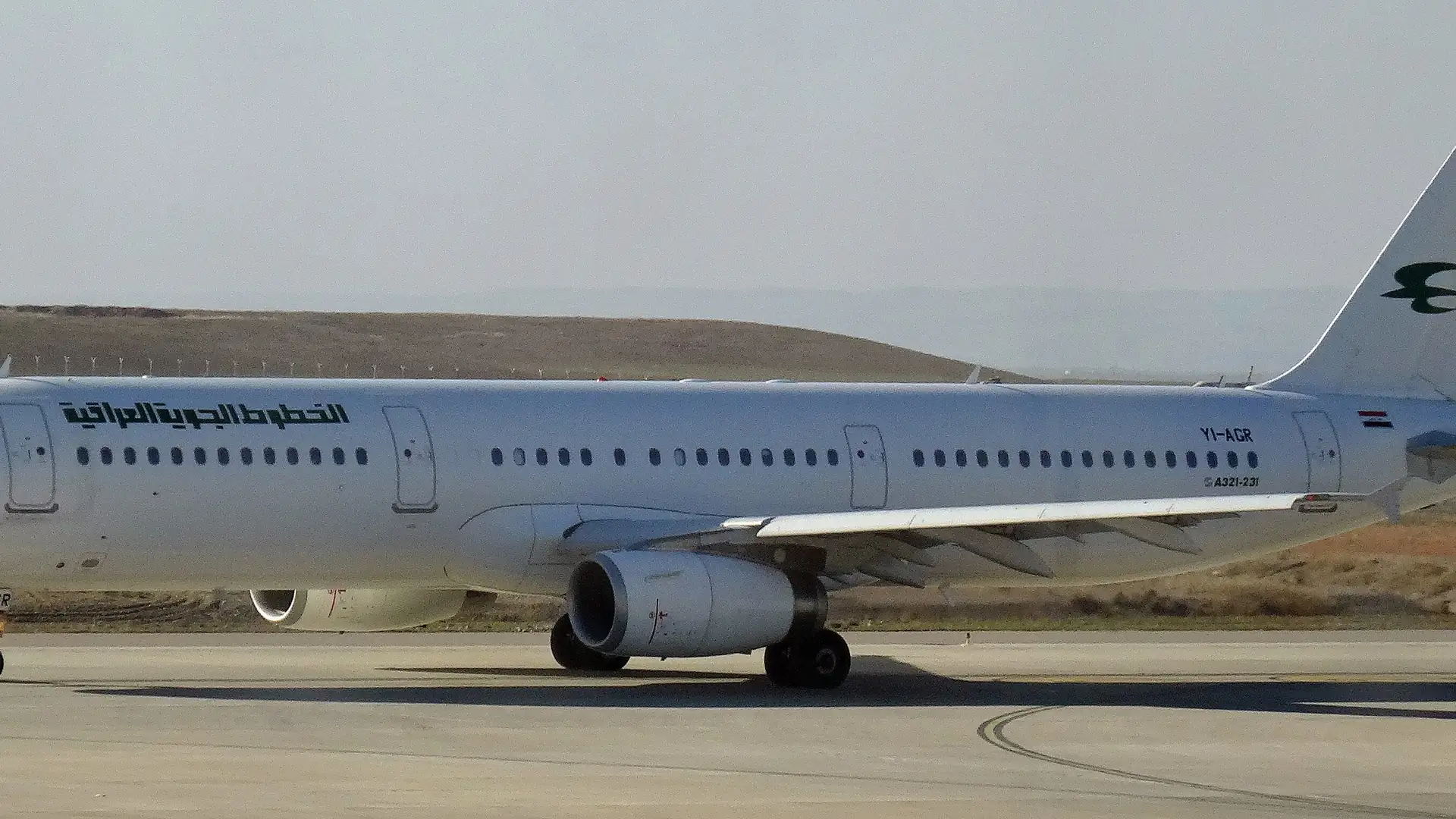
A Special Federal Aviation Regulation (SFAR) is a binding federal rule prohibiting U.S. air carriers, commercial operators, and FAA-certificated pilots from operating within designated sovereign airspace without specific authorization [source-2]. Simultaneously, a Notice to Airmen (NOTAM) alerts flight crews to immediate hazards, navigational outages, and conflict perimeters [source-2]. These dual mandates confirm that the operational hazard envelope for Iraq encompasses not only ground airfields, but the entire airspace column of any connecting route traversing the Baghdad Flight Information Region (FIR) [source-2].
This dynamic creates a sharp regulatory divergence between international carriers [source-2]. While U.S. carriers must comply with FAA SFAR prohibitions by re-routing around Iraqi airspace, foreign carriers maintain different overflight permissions [source-2]. These detours burn excess fuel and cause missed connections at major transfer hubs [source-2]. Stranded passengers facing multi-hour diversions frequently turn to delay compensation claims to recover rebooking expenses resulting from complex regional airspace management decisions [source-2].
The March 2, 2026 Order and State Department Non-Emergency Evacuations
The severity of the current security environment is codified in extraordinary diplomatic actions taken by the United States government [source-1]. On March 2, 2026, the U.S. Department of State issued an updated travel warning for Iraq, reinforcing its highest alert posture and ordering the mandatory departure of non-emergency personnel [source-1].
"Do not travel to Iraq for any reason. Leave now if you are there." [source-1]
On March 2, 2026, the Department of State ordered non-emergency U.S. government employees to depart Iraq due to critical security concerns [source-1]. When a sovereign state withdraws diplomatic staff, it indicates to international observers that civilian infrastructure and commercial transport corridors cannot be protected by conventional security guarantees [source-1].
The formal grounds cited by the State Department for maintaining an Iraq travel advisory Level 4 warning encompass five threat categories: terrorism, kidnapping, armed conflict, civil unrest, and the severely limited ability of the U.S. government to deliver emergency services to citizens [source-1]. Terrorist and insurgent elements routinely launch attacks against Iraqi security forces and civilians [source-1]. Anti-U.S. militias actively threaten American citizens and multinational commercial enterprises operating across the country [source-1].
These armed groups execute strikes using improvised explosive devices (IEDs), indirect rocket fire, and unmanned aerial vehicles (UAVs) across multiple provinces and major cities [source-1]. Consequently, remaining U.S. personnel must live and work under strict security protocols [source-1]. Demonstrations, protests, and strikes occur frequently without warning, interrupting traffic, blocking transport corridors, and turning violent [source-1]. Travellers are directed to avoid armed groups and refrain from approaching Iraq's northern border perimeters [source-1].
Comparative Risk Indicators Across the 21 Level 4 Nations
To evaluate the operational significance of the Iraq advisory, travel risk analysts benchmark its restrictions against global consular warnings [source-4][source-6]. Within the advisory hierarchy maintained by the U.S. Department of State, Level 4 represents the most severe tier, establishing a complete prohibition on travel [source-4][source-6].
The State Department has designated exactly 21 nations worldwide as Level 4 (Do Not Travel), placing Iraq alongside Russia, Ukraine, North Korea, Syria, Sudan, South Sudan, the Democratic Republic of the Congo, Venezuela, and Haiti [source-4]. By contrast, Level 3 advisories urge Americans to "reconsider travel," identifying serious localized perils while noting that baseline commercial transport remains functional [source-4]. Crossing into Level 4 reflects an erosion of domestic rule of law and the inability of diplomatic missions to intervene during crises [source-4][source-6].
| Sovereign Nation | Advisory Tier | Primary Ground Threat Vector | Aviation & Airspace Status | Consular Emergency Relief Limit | Verified Source |
|---|---|---|---|---|---|
| Iraq | Level 4: Do Not Travel | Terrorism, Militias, IEDs, Drone Attacks | FAA SFAR & NOTAM Airspace Order | Evacuated non-emergency staff; minimal aid | [source-1][source-2][source-4] |
| Syria | Level 4: Do Not Travel | Civil War, Kidnapping, Armed Hostilities | Prohibited airspace; border prison peril | Zero operational consular support | [source-3][source-4] |
| Russia | Level 4: Do Not Travel | Armed Conflict, Arbitrary Detention | Western carrier airspace closure; sanctions | Severely restricted embassy assistance | [source-4][source-6] |
| Ukraine | Level 4: Do Not Travel | Active War, Missile & Air Strikes | Complete civilian airspace shutdown | No civilian consular extraction | [source-4][source-6] |
| Sudan | Level 4: Do Not Travel | Military Clashes, Paramilitary Warfare | Khartoum airspace and airfield closures | Suspended embassy operations | [source-4] |
As shown in the comparative framework, the Iraq travel advisory Level 4 alert combines extreme surface warfare with international airspace prohibitions [source-1][source-2][source-4]. While nations like Venezuela or Haiti present governance breakdowns, Iraq presents an environment where armed militias, indirect fire, and unmanned aerial vehicles intersect with civilian flight paths [source-1][source-2]. For international travellers, this intersection turns routine overflight sectors into high-consequence transit environments [source-2][source-7].
Northern Border Zones and the Kurdistan Regional Government 10-Year Penalty
While travel discourse often portrays northern Iraq and the Kurdistan Region as relatively stable enclaves compared to central provinces, federal travel advisories maintain a strict warning across the entire territory [source-1]. The Department of State explicitly commands travellers: do not travel near armed groups or Iraq's northern borders [source-1].
The northern frontier represents an intensely volatile boundary where international armed forces, militias, and insurgent factions operate [source-1]. Cross-border artillery strikes and drone missions occur regularly along mountainous border corridors adjoining Turkey and Iran [source-1]. Travellers and contractors navigating these remote frontier roads face immediate danger from active minefields, unexploded ordnance, and armed skirmishes [source-1].
In addition to physical hazards, travellers navigating the northern border sector face statutory legal liabilities [source-3]. The State Department issues an explicit warning prohibiting U.S. citizens from travelling through Iraq to engage in armed conflict in Syria [source-3]. Individuals attempting cross-border movements face extreme personal risks—kidnapping, injury, and death—alongside immediate criminal arrest, prohibitive fines, and expulsion [source-3].
The judicial system of the northern region enforces strict border statutes [source-3]. The Kurdistan Regional Government has stated it will impose prison sentences of up to ten years on individuals who illegally cross the Iraq-Syria border [source-3]. Foreign citizens detained by regional security forces face prosecution under strict border legislation without diplomatic immunity [source-3].
Beyond regional statutes, participation in foreign armed conflicts triggers severe exposure under U.S. federal criminal law [source-3]. Fighting for or supporting designated terrorist organizations can constitute material support under U.S. law with prison and fine exposure [source-3]. Citizens assisting armed factions risk federal prosecution, resulting in lengthy prison sentences and heavy criminal fines [source-3].
The Will and DNA Mandate: The Logistics of Zero Consular Capacity
The defining administrative feature of an Iraq travel advisory Level 4 alert is the withdrawal of sovereign diplomatic assistance [source-1][source-4]. Most international travellers believe that a Western passport provides an inviolable safety net, assuming that an overseas embassy can coordinate emergency medical evacuations or negotiate legal releases during a crisis [source-1][source-4].
Under Level 4 conditions, this assumption is completely false [source-1][source-4]. The State Department explicitly warns that the United States government maintains severely limited ability to provide emergency services to U.S. citizens inside Iraq [source-1]. Because diplomatic personnel must live and work under stringent security perimeters and cannot travel freely across the country, consular officers are physically unable to reach private citizens stranded in provincial cities, detained at militia checkpoints, or wounded during kinetic attacks [source-1].
The practical reality of this consular deficit is documented in reporting by the Associated Press regarding Department of State guidance for Americans considering Level 4 destinations [source-4]. For individuals considering Level 4 travel, the Department has told Americans to write a will and leave DNA samples as worst-case preparation [source-4]. This guidance illustrates that government agencies treat travel into Level 4 jurisdictions as environments where official emergency recovery operations may prove impossible [source-4].
This consular absence creates severe financial consequences for travellers [source-1][source-4]. Standard commercial travel policies contain war exclusions that automatically terminate medical evacuation coverage once an advisory reaches Level 4 [source-1][source-4]. Travellers navigating multi-leg journeys near contested flight sectors must secure specialized travel insurance that provides explicit high-risk extraction coverage, ensuring private medical teams can intervene when diplomatic missions cannot [source-1][source-4].
OsintRai Route Heat Monitoring: Corridor Assessment at 69.5 to 79.0
Real-time travel risk assessment requires continuous intelligence synthesis rather than periodic reviews of static government documents [source-7]. At the OsintRai intelligence desk, dedicated tracking boards monitor shifting threat dynamics across international flight corridors, combining sovereign regulatory filings, military NOTAM broadcasts, and open-source intelligence feeds [source-2][source-7].
On the daily watch board for October 13, 2026, the risk heat score for Iraq remains quantified within the elevated friction corridor of 69.5 to 79.0 [source-7]. This metric is driven by three primary operational variables: daily advisory-page rechecks confirming active Level 4 Do Not Travel parameters, persistent regional airspace chatter regarding potential air defense alerts, and frequent surface security disruptions across key transport axes [source-1][source-2][source-7]. While separate geographic corridors—such as the October 12, 2026 Saudi Arabia and Riyadh attack corridor—remain under dedicated tracking following isolated kinetic events, the Iraq assessment focuses strictly on the enduring structural fusion of severe ground threats and active FAA civil aviation restrictions [source-1][source-2][source-7].
For the international passenger, the lessons of the Iraq travel advisory Level 4 warning extend beyond Baghdad's city limits [source-1]. When planning long-haul connecting flights, travellers must cultivate route-level situational awareness [source-2]. Assuming that intercontinental flights automatically bypass conflict zones exposes passengers to unexpected diversion risks, legal pitfalls, and consular isolation [source-1][source-2][source-4].
Before booking international itineraries, travellers should verify active FAA SFAR notices, check NOTAM restrictions, register all sectors through the Smart Traveler Enrollment Program, and confirm that emergency coverage accounts for airspace disruptions [source-2][source-4][source-5]. When aviation regulators and diplomatic agencies issue their highest travel warnings, travellers must understand not merely where an aircraft lands, but every mile of the sky through which it flies [source-1][source-2].
Anyone weighing a trip against the Level 4 advisory should first secure travel insurance that names the risk explicitly, and keep an Airalo eSIM active so registration and consular contact do not depend on a local network.
Outlook
The advisory framework and the March 2, 2026 non-emergency evacuation order are unlikely to relax while regional airspace chatter persists. Travellers routing through Gulf hubs should treat any itinerary that overflies the Baghdad FIR as a schedule-risk item, keep connections padded, and confirm with the carrier whether the flight plan uses an FAA-compliant corridor. OsintRai's route-heat board keeps the corridor on watch while advisory updates hold the desk score elevated.
📑 7. Verified Evidentiary References (31 sources) — click to expand
- [1] U.S. State Department: Iraq Travel Advisory: Level 4 Do Not Travel travel.state.gov/content/travel/en/travela…
- [2] U.S. State Department: Iraq Travel Advisory: aviation safety annex travel.state.gov/content/travel/en/travela…
- [3] U.S. State Department: Iraq Travel Advisory: legal risk and armed conflict travel.state.gov/content/travel/en/travela…
- [4] Associated Press: International news agency reporting apnews.com
- [5] USA.gov: Smart Traveler Enrollment Program (STEP) step.state.gov
- [6] U.S. State Department: Travel advisories directory travel.state.gov/content/travel/en/travela…
- [7] Safe Airspace: Conflict zone and risk database safeairspace.net
- [8] FAA: FAA regulations and Special Federal Aviation Regulations faa.gov/regulations_policies/faa_regulatio…
- [9] EASA: Conflict Zone Information Bulletins easa.europa.eu/en/domains/air-operations/c…
- [10] EASA: EASA air operations safety framework easa.europa.eu
- [11] Safe Airspace: Kuwait conflict zone and risk assessment safeairspace.net/kuwait
- [12] Safe Airspace: Saudi Arabia conflict zone and risk assessment safeairspace.net/Saudi%20Arabia
- [13] OPSGROUP: Middle East airspace analysis and NOTAM briefs ops.group/blog/tag/middle-east
- [14] UK FCDO: Foreign travel advice index gov.uk/foreign-travel-advice
- [15] UK FCDO: Foreign travel advice: Iraq gov.uk/foreign-travel-advice/iraq
- [16] Global Affairs Canada: Iraq travel advice and advisories travel.gc.ca/destinations/iraq
- [17] Eurocontrol: Network operations and airspace disruption eurocontrol.int
- [18] UNHCR: Iraq emergency and displacement data portal emergency.unhcr.org
- [19] ICRC: Iraq humanitarian operations icrc.org/en/where-we-work/middle-east/iraq
- [20] ICRC: International humanitarian law and protection icrc.org
- [21] ACLED: Conflict events and fatality data acleddata.com
- [22] UCDP: Organized violence event data ucdp.uu.se
- [23] OSAC: Security information and country councils osac.gov
- [24] Marsh McLennan: Aviation war-risk insurance premiums marsh.com
- [25] International SOS: Security and medical assistance in high-risk environments internationalsos.com
- [26] Global Rescue: Medical evacuation and security extraction protocols globalrescue.com
- [27] BBC News: Middle East security and aviation coverage bbc.com/news/world/middle_east
- [28] Al Jazeera: Middle East conflict reporting aljazeera.com/middle-east
- [29] The National: Middle East aviation and airspace coverage thenationalnews.com
- [30] Aviation Week: Airspace risk bulletins and conflict-zone routing aviationweek.com
- [31] Al-Monitor: Iraq political and security analysis al-monitor.com