France Protests 2026: The Louvre Closed and the Advisory Did Not Move
The Louvre closed on October 19 after student blockades, following a weekend of roughly half a million demonstrators. What the advisories, curfews, and refund paths
France Protests 2026: The Louvre Closed, Half a Million Marched, and What It Means for Your Trip
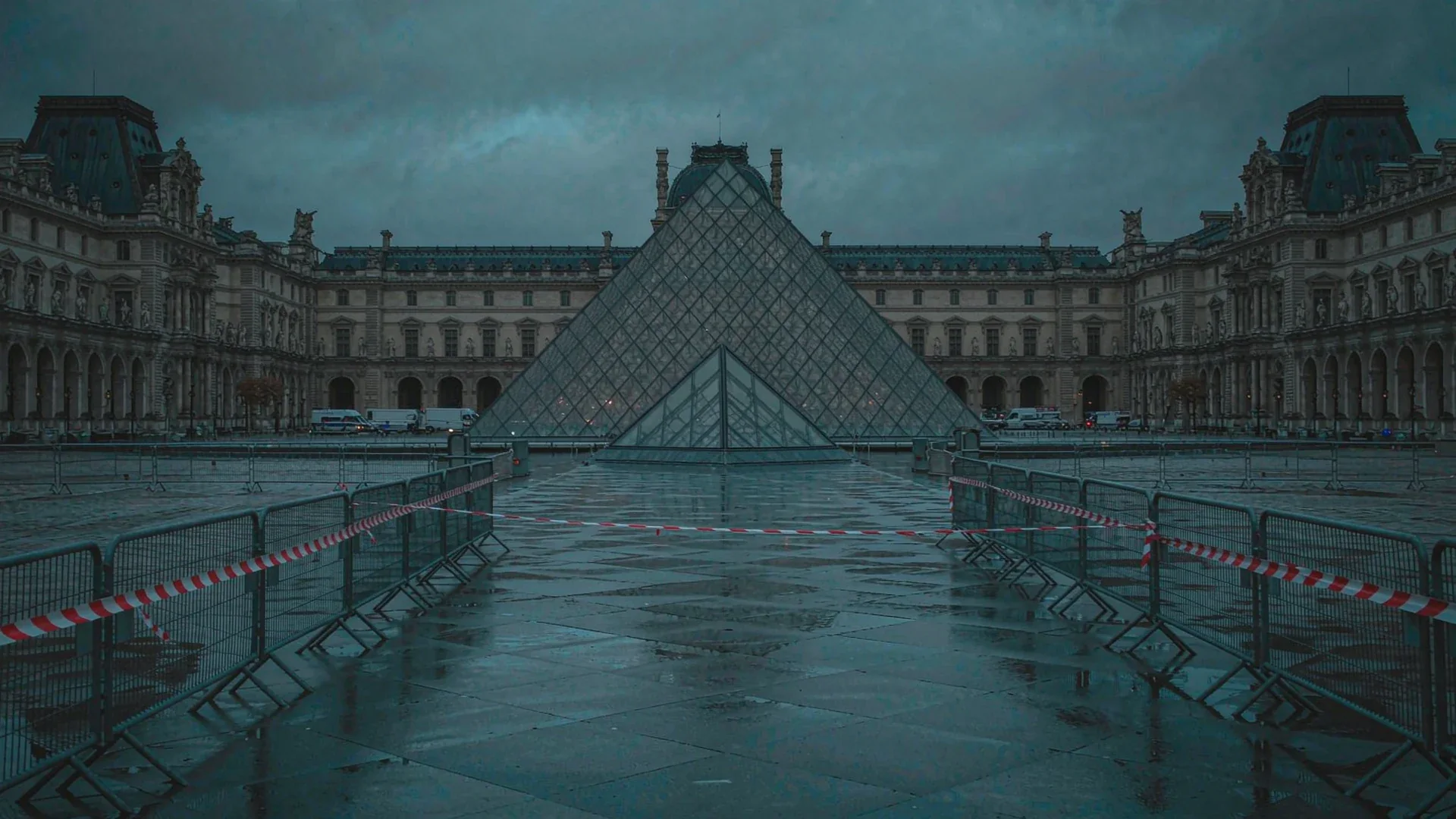
On Monday, October 19, 2026, the most visited museum on earth did not open. Students from the Ecole du Louvre and several Paris high schools formed picket lines around the entrances to the Louvre, set up barriers roughly 100 metres from the glass pyramid, and turned away ticketed visitors who had traveled from as far as Australia. One of them, a 73-year-old pensioner named Anne Boland, had spent more than 20 hours in the air. Her advice to anyone still planning a trip was two words: "Stay home." [source-4]
That quote traveled around the world faster than any advisory. It also framed the question badly. The real question for a traveler is not whether Paris is safe in some absolute sense. It is which of your bookings are exposed, to what, and what you can recover. Those are three separate questions with three separate answers, and treating them as one is how people lose both money and a holiday.
This France protests travel advisory breakdown covers the weekend, the closures, the advisories, the transport picture, and the recovery paths that actually exist. It is written for the traveler with a booking in hand rather than for the reader following the news cycle.

What actually happened, in order
The sequence matters, because each step changes what your options are.
Saturday, October 17 was the mass mobilization. Roughly half a million people turned out across France to protest the rising cost of living, according to reporting by Agence France-Presse [source-2]. For scale, that is about 0.7% of the country's 68 million residents on the street in a single day. The demonstrations were organized in part by the Yellow Vests movement and were joined by high school students who had already been protesting conditions in their schools. In several cities, peaceful gatherings gave way to clashes, looting, and attacks on public buildings and businesses.
By the end of that day, Prime Minister Sebastien Lecornu said 1,200 people had been arrested nationwide and 150 police officers had been hurt, describing street violence of what AFP translated as "extreme intensity." Those are government figures reported by the news agency, and they are the only hard crowd-and-arrest numbers available as of October 19. [source-6]
Sunday, October 18 was the cleanup and the assessment. Local officials responded with targeted curfews in parts of Paris and in some northern cities including Lille, applying mainly to overnight hours. The German foreign ministry revised its France guidance on this day, warning that further demonstrations and isolated outbreaks of violence could not be ruled out. [source-6]
Monday, October 19 was the Louvre closure. Student picket lines blocked public access points early in the morning and the museum suspended admissions for the day. The Louvre posted a closure notice on its official website citing the impact of protests on operations and visitor safety. As of the afternoon in Paris, there was no published information on automatic refunds or a standardized rebooking process [source-4]. The museum sits about 300 m from the Palais-Royal metro entrance, which is why the blockade could be established before opening hours rather than during them.
Looking forward, the Yellow Vests movement has called for further protests on the coming Saturday, and the government is weighing partial, targeted curfews. A one-day action can become a pattern, and the pattern is what should drive your planning rather than the single closed day. [source-6]
The Louvre closure is a logistics problem, not a safety problem
This distinction is the single most useful thing to internalize, because it determines whether you are claiming on insurance·, asking for a refund, or simply changing a plan.
A blockade at a museum entrance is a access failure. The building is intact, the collection is intact, the surrounding district is functioning, and the risk to a visitor standing outside is the ordinary risk of standing in a crowd near a demonstration. You are not evacuating. You are being told the door is shut.
Contrast that with an event that closes a transport corridor or produces a security incident in a public space. That is a safety event, and it triggers a different set of rights, different insurance clauses, and different advice about whether to travel at all.
Travelers who conflate the two tend to make two opposite mistakes. Some cancel entire trips over a closed museum ticket and eat the full cost of flights. Others march toward the barricades for a photograph because "it's just a protest," and put themselves in the middle of exactly the crowd that the advisories are warning about. Both groups are responding to the headline rather than to the mechanism.
The mechanically correct response to a closure is narrow and boring: document it, claim it, and reroute the day. The mechanically correct response to a violent flashpoint is also narrow: leave the area, and do not treat a burning car as scenery.
The numbers behind the weekend
Every figure in this France protests travel advisory reading comes from named reporting and carries its own definition. Where a number has no published methodology, it is flagged as a claim rather than a measurement. Nothing here is estimated by us.
| Figure | Value | What it measures | Source |
|---|---|---|---|
| Protesters nationwide, Saturday | About 500,000 | Turnout across France at cost-of-living demonstrations | AFP, via Daily Sabah and ABS-CBN |
| Arrests nationwide, Saturday | 1,200 | Government figure announced by PM Sebastien Lecornu | AFP |
| Police injured, Saturday | 150 | Government figure announced by PM Sebastien Lecornu | AFP |
| French tourism industry size | EUR 14 billion (about USD 16 billion) | Annual tourism revenue, as cited in protest coverage | AFP |
| Distance of Louvre barriers from pyramid | About 100 metres | Physical picket line position | French outlet coverage via The Traveler |
| US advisory level for France | Level 2 | "Exercise increased caution," issued May 2025, unchanged as of Oct 19 | US State Department via The Traveler |
One caution about the half-million figure. Crowd counts in France are contested by design, because unions and police use different counting methods, and no independent tally is published on the night. Treat 500,000 as the reported figure for a national mobilization rather than a precise census, and do not compare it to counts from other countries compiled under different rules. [source-2]
The EUR 14 billion figure is more useful than it looks. It tells you how much commercial pressure exists to keep the tourism machine running. That pressure is the reason you will see museums reopen, airlines keep flying, and hotels stay accommodating even during a protest week. It is also the reason advisories stop short of telling you to cancel. [source-1]
Where the next flashpoints are
Protest geography in France is unusually predictable, which is good news for a traveler. Marches follow announced routes through the same set of large squares and boulevards. If you know the map, you can plan around the risk instead of through it.
In Paris, the recurring assembly and confrontation points are Republique, Bastille, Nation, and Place d'Italie. These are the hubs that local English-language guides name explicitly, and they are where travelers with accommodation nearby are most likely to hear or see a demonstration even while the rest of the city functions normally.
| Zone type | What to expect | Practical handling |
|---|---|---|
| Named squares (Republique, Bastille, Nation, Italie) | Assembly points, speeches, heavy police presence, tear gas possible after dark | Do not book accommodation on these squares during a protest week; cross them by metro rather than on foot |
| Museum and monument district (1st arrondissement) | Access blockades, barriers, last-minute closures, crowds of displaced tourists | Book timed slots late in the day, keep the booking app open, and have a substitute plan within walking distance |
| Airport corridors (CDG, Orly) | Taxi and transfer uncertainty, road blockades on approach roads | Take the rail link where possible; build a two-hour buffer on departure day |
| Northern cities (Lille and others) | Overnight curfews in specific districts | Confirm curfew boundaries with your accommodation, not with social media |
| Secondary cities (Marseille, Lyon, and dozens more) | Solidarity marches, localized disruption | Check the local prefecture notice the morning of travel |
The pattern to plan around is the weekend. Saturday is the mobilization day, which means Friday night through Sunday morning is the window with the highest chance of transport disruption and the lowest chance of a quiet museum visit. If your itinerary is flexible, the middle of the week is the calmer half.
What the advisories say, country by country
Advisory language is easy to misread because it is written by diplomats for diplomats, and the France protests travel advisory picture is a good example of why. Here is what the current guidance actually commits to.
The United States has not raised its overall advisory level for France. The existing Level 2 advisory, issued in May 2025, remains in effect. Level 2 means "exercise increased caution." It is the same level France has carried for reasons that include terrorism risk and the potential for civil unrest, and the advisory notes that protests and strikes are common in France and may cause localized disruption in large cities. A Level 2 that predates this weekend is a statement that the weekend did not change the baseline assessment. [source-4]
Germany revised its France guidance on October 18, warning that further demonstrations and isolated outbreaks of violence cannot be ruled out in the coming days, and urging travelers to avoid protest areas. That is a revision to the safety and security section rather than a change in travel recommendation.
China's foreign ministry and its embassy and consulates in France renewed a safety advisory for nationals on October 20, following what it described as large-scale demonstrations and violent clashes in several French cities including Paris, Marseille, and Lyon. The notice urges vigilance, close monitoring of local developments, and standard precautions. [source-5]
The pattern across all three is identical: update the security paragraph, name the specific risk, tell people to avoid protest areas, and do not tell anyone to cancel a trip. When multiple governments converge on the same non-action, that convergence is itself the signal.
Transport: airports, rail, and the taxi warning
Aviation has not stopped. The risk to your journey is on the ground, on the roads between the airport and the city, and in the last mile of a transfer.
At Charles de Gaulle over the weekend, taxi drivers warned arriving passengers that they might not be able to reach their destination if protesters blocked their routes. That is an operational warning from the drivers themselves, and it should be read literally: the flight lands, the train runs, the taxi may not be able to complete the trip [source-1]. The geometry explains it. Charles de Gaulle sits about 25 km northeast of the city centre, and on a normal day the RER B covers that distance in roughly 35 minutes. A blockade does not have to be large to break a road transfer across 25 km of approach roads; it only has to sit on one of them.
The practical hierarchy is straightforward. Rail links into the city are less exposed than road transfers, because a blockade that stops cars does not automatically stop a train on its own right of way. Metro stations sitting directly on a march route may close temporarily, which matters more for intra-city movement than for airport transfers, but the closure is announced station by station and is usually short.
If a flight is cancelled rather than delayed, the compensation· question turns on the cause and on where the disruption sits in the chain. Weather and air traffic control are treated differently from an airline's own operational decision, and a general strike is a category with its own treatment. Because the entitlement depends on the specific cancellation reason coded against your booking, the productive move is to check eligibility against the actual record rather than assume from the headline. Services such as AirHelp exist to run that check across jurisdictions, and the useful thing they do is not the claim itself but the determination of whether a claim exists at all.
To keep the distances concrete: Orly sits 13 km south of the centre, Lille is 225 km north on a line the TGV covers in just over an hour, and the metro network that absorbs diverted foot traffic runs to 16 lines across the city. Tourism is not a marginal industry here. It contributes roughly 7% of French GDP, and about 70% of the Louvre's visitors come from outside France, which is why a museum closure in Paris becomes an international travel story rather than a local inconvenience. [source-4]
For departure-day buffers, two hours is the number that keeps showing up in practice for a city-to-airport transfer during a disruption week. That is a planning heuristic, not a published standard, and it assumes you are using rail rather than road.
Curfews: what they do and do not cover
The word curfew sounds like it should end a holiday, which is why it dominates the France protests travel advisory coverage. In this case it does something much narrower. [source-6]
The curfews introduced over the weekend are targeted and local, applying mainly to overnight hours in parts of Paris and in some northern cities including Lille. They are designed to prevent renewed nighttime disorder. There is no indication that daytime sightseeing has been broadly curtailed. [source-6]
What that means concretely: an evening dinner reservation inside a curfew zone is exposed, a morning museum slot is not, and a late arrival into a city where a curfew is in force needs a confirmed plan for the final leg. Travelers staying near demonstration hotspots may notice more police presence, sirens, and temporary street closures after dark, which is the expected texture of an enforced curfew rather than an escalation. [source-6]
The failure mode to avoid is treating a district-level overnight restriction as a national lockdown and cancelling a week of bookings. The opposite failure is equally common: ignoring it and discovering at 23:00 that the route back to the apartment is closed.
One habit that pays for itself during a disruption week is connectivity that does not depend on finding a working SIM vendor in a tense city. An eSIM installed before departure, such as Airalo, keeps the prefecture notices, hotel messages, and airline updates reachable on arrival, which is exactly when you need them and exactly when the local shops may be shut.

Insurance and the civil unrest clause
This is where most claims fail, and the failure is almost never about the peril. It is about the wording.
Standard travel policies commonly contain clauses addressing civil unrest, riot, and civil commotion. The clauses vary in three ways that matter: whether unrest is covered at all, whether cancellation is covered when the traveler simply fears unrest, and whether a non-refunded prepaid attraction that closes counts as a documented loss.
The general shape across the market is consistent. Cancelling a trip because you are anxious about protests is usually not a covered reason, and no policy pays out on anxiety alone. A prepaid attraction that closes unexpectedly and whose operator refuses a refund is a different category, and some policies will respond to it. Where the wording is silent rather than explicit, the outcome depends on the insurer's reading, which is why the policy document, not the marketing page, is the thing to open.
The documentation requirement is where the money is actually won or lost. Insurers ask for evidence, and during a protest the evidence exists for a window of hours before the museum's page changes and the booking platform's messaging shifts. Screenshot the closure notice on the official site with the date visible. Screenshot the booking confirmation and the amount paid. Save the email where the operator declines a refund. Keep the receipt for any substitute attraction you paid for on the same day.
A claim without a timestamped closure notice is a story. A claim with one is a file.
For travelers who want the closure-and-disruption category covered rather than argued about after the fact, a policy built around documented-event triggers, such as Ekta, removes the interpretive step, because the question becomes whether the event is on the schedule rather than whether an adjuster sympathises.
The rebooking playbook for timed tickets and prepaid attractions
The Louvre situation exposed a real gap in how attractions handle disruption: as of the afternoon of the closure, there was no published information on automatic refunds and no standardized rebooking process. Visitors were left to contact their booking platform or their card provider directly. [source-4]
That is the environment you should assume, not the environment you hope for. The playbook that works in it has five steps.
First, establish where the ticket was bought. A ticket bought from the museum directly sits in one system. A ticket bought through a reseller or as part of a city pass sits in another, and the reseller's terms govern the refund even when the museum is the one that closed. Confusing the two is the most common way people lose a valid claim.
Second, capture proof before you move. The closure notice, the ticket, the payment record, the timestamp. Do this the same day, from the same phone, and do not rely on being able to find the page later.
Third, request the refund in writing through the channel that created the booking. A written request creates a dated record that a card dispute can build on. A verbal request at a closed door creates nothing.
Fourth, use the chargeback path only after the merchant path fails. Card disputes have their own deadlines and their own evidentiary standards, and a dispute filed too early can be closed as premature.
Fifth, do not let a closed attraction consume the day. In Paris the substitute within walking distance of the Louvre is deep: the Musee de l'Orangerie, the Jeu de Paume, the Tuileries, the Palais Royal arcades. The point is not to salvage the exact experience. It is to stop a 20-euro ticket from becoming a 200-euro bad mood. [source-4]
| Booking type | Who controls the refund | What to capture | Realistic outcome |
|---|---|---|---|
| Museum ticket bought direct | The museum | Closure notice with date, ticket, payment record | Rebooking or credit most likely; automatic refunds not well supported |
| Ticket via reseller or city pass | The reseller | Reseller terms page, booking confirmation, closure notice | Refund depends on reseller terms; expect friction |
| Prepaid guided tour | The tour operator | Operator cancellation message, meeting point notice | Credit or reschedule usually offered |
| Flight | The airline | Cancellation reason code, booking reference | Rerouting or refund depending on cause; compensation only in specific cases |
| Hotel near a flashpoint | The property | Written request, rate terms | Discretionary; goodwill is highest before check-in |
Should you cancel? A decision framework
There is no single right answer to a France protests travel advisory decision, and anyone selling you one is selling certainty they do not have. What you can do is make the decision on the variables that actually change your exposure.
Score your trip on four axes. Proximity: is your accommodation on or adjacent to a named assembly square. Timing: does your stay overlap a Saturday or an announced national action date. Composition: are you traveling with people who cannot move quickly or who would be frightened by tear gas and sirens. Reversibility: can you move the dates without losing the money.
If proximity is low, timing misses the weekend, the group is mobile, and the booking is flexible, the rational move is to go and reroute around the flashpoints. This describes the majority of tourist itineraries, and it is why the tourism industry keeps functioning through protest weeks. [source-1]
If two or more of those axes are bad, the rational move is to move the dates rather than cancel the trip. Date changes preserve value. Cancellations destroy it. An airline change fee plus a hotel date shift is almost always cheaper than writing off a prepaid week.
There is one axis that overrides the arithmetic. If a member of your party would be in genuine distress in a city with tear gas in the air, do not spend the money to find out. That is not a financial calculation and it should not be dressed up as one.
What is not rational is the middle position that a lot of travelers occupy during a news cycle: keeping the booking, arriving anxious, staying inside, and paying for a holiday they do not take. That outcome costs the same as cancelling and delivers less.
What tourists and locals are actually reporting
The reporting from the ground is more nuanced than either the "stay home" headline or the "Paris is fine" counter-narrative.
A Dutch tourist who cycled through the city the day before described touring a "war zone," with debris from fires and glass on the pavement. He was 63 and had expected Haussmann buildings and corner cafes. That account is real and it is not representative of the whole city. [source-3]
An American university professor, 62, said she had not seen anything concerning. A video broadcast by CBS showed a couple drinking on a city terrace, unfazed by a fire in the road nearby. That account is also real.
Both are true because Paris during a protest week is not one place. It is a functioning city with a set of specific geography where the disruption concentrates. The travelers who had a bad time were largely the ones whose plans put them at the barricades with no alternative, and the travelers who had a normal time were the ones whose plans did not.
The detail that reliable captures the gap is small. Turned away from the Louvre, many visitors took selfies in front of the former palace. The building was still there, the trip was still happening, and the plan had simply changed without warning. Whether that reads as a disaster or an anecdote depends almost entirely on whether anything else in the itinerary was recoverable. [source-4]
FAQ
What does this France protests travel advisory mean in one sentence?
Half a million people marched, the Louvre closed for a day, and the advisory level did not change, so the exposure is geographic rather than national. [source-2]
Is the Louvre open now? [source-4]
The museum was closed on Monday, October 19, 2026 following a student blockade of its entrances. Reopening depends on whether the action continues, and the authoritative signal is the closure notice on the museum's own website rather than a news summary. Check it on the morning of your visit, not the week before.
Is it safe to travel to Paris right now?
Multiple governments have updated their security guidance without raising their overall advisory level for France, and the US advisory remains at Level 2, unchanged since May 2025. The practical risk is concentrated in specific squares during specific hours. Avoiding named assembly points after dark and staying out of crowds is the mitigation that the advisories actually recommend. [source-4]
Will my insurance pay for a closed museum?
It depends on the policy wording. Cancelling out of fear is generally not covered. A prepaid attraction that closes and whose operator refuses a refund falls into a documented-loss category that some policies do cover. Keep the closure notice with a visible date, the ticket, and the payment record.
What happens if my flight is cancelled because of the protests?
Your rerouting or refund entitlement depends on the cancellation reason coded against the booking, and compensation is a separate question that turns on the cause and the jurisdiction. Check the specific record rather than the general rule, and do not assume that a strike and a weather disruption are treated the same way.
Should I cancel my trip?
Judge it on four things: whether your accommodation sits on an assembly square, whether your dates overlap a Saturday or an announced action, whether your group can move quickly, and whether your bookings are flexible. Most itineraries come out of that test as "go and reroute." Two or more bad axes usually means moving the dates rather than cancelling.
Is the rest of France affected?
Demonstrations took place in dozens of major and medium-sized cities including Paris, Marseille, and Lyon, and overnight curfews were introduced in parts of Paris and in some northern cities including Lille. Disruption outside the named flashpoints is localized and, for most visitors, invisible. [source-6]
What about the coming weekend?
The Yellow Vests movement has called for further protests on the coming Saturday, and the government is weighing partial, targeted curfews. If your trip includes a Saturday, plan the day around the announced route rather than hoping the route avoids you. [source-6]
Outlook: the next seven days
The near-term picture is a schedule question rather than a safety question. Three markers decide it.
First, the announced Saturday action. The Yellow Vests movement has called for further protests on the coming Saturday, which makes the window from Friday night to Sunday morning the exposed one. Second, the curfew review. District-level overnight restrictions in parts of Paris and in Lille were introduced as a weekend measure, and whether they are extended, narrowed, or lifted is a decision that will be published locally before it is published anywhere else. Third, the Louvre's operating status. A one-day suspension is a closure; a pattern of suspensions becomes an itinerary problem, and the museum's own site is the authority rather than any aggregator. [source-6]
Late October in Paris runs around 14°C by day, which matters for one practical reason: a closure that pushes a museum day outdoors is survivable in this weather and would not be in January. That is the argument for rerouting rather than cancelling on this particular weekend. The cost of a rerouted day is a walking route; the cost of a cancelled trip is the whole booking.
If the pattern extends past the coming weekend, the decision framework in this article does not change. It just gets applied to a second set of dates.
What this France protests travel advisory does not change
The underlying trip mechanics are unchanged. Flights still operate, hotels still honour bookings, and most of the country is going about its week. What changed is the concentration of risk into a few named squares on a few named days. A traveler who reroutes around those is not cancelling a holiday, and a traveler who does not is taking a small, avoidable gamble with the most expensive part of the itinerary. That is the whole France protests travel advisory answer, and it fits in one sentence.
Every figure in this article is attributed to the reporting above. Crowd counts are reported figures rather than independently verified tallies, and the tourism revenue figure is an annual total cited within protest coverage rather than a measured loss from this event. Where a number had no published methodology, it is described as a claim. [source-1]
Sources
- [source-1] Skift: France Protests Impact Travel Industry, Tourism
- [source-2] Daily Sabah / AFP: Tourists trade cafes for barricades in France
- [source-3] ABS-CBN / AFP: Tourists find themselves in a France convulsed by protests
- [source-4] The Traveler: Louvre Closure and Rising Unrest, What Tourists Should Know
- [source-5] ECNS: China's foreign ministry urges nationals in France to stay vigilant
- [source-6] Asharq Al-Awsat: Tourists find themselves in a France convulsed by protests