Executive Summary: The Border Changed Hands on 12 October
On 12 October 2026, the European Union's Entry/Exit System (EES) went live at the bloc's external Schengen borders, beginning the gradual rollout of biometric registration for every non-EU national crossing the external frontier. [source-1] [source-2] The system captures a facial image and four fingerprints from non-EU travellers at passport control, replacing the paper-and-stamp procedure that governed the Schengen area for nearly two decades. [source-1] [source-3] Britain's own government has told its citizens to expect checks on short-haul European routes, a reversal of the passport-free-travel arrangement British and European travellers have relied on since the 1990s. [source-2] The United Kingdom's guidance is not cosmetic: British nationals are now treated as third-country nationals for the purposes of EES registration, which means the queue that a British family previously walked straight through now requires a biometric capture stop. [source-2] [source-4] Reuters has documented what the biometric checks mean in practice for non-EU citizens, and the reporting is unambiguous about the operational consequence: longer border processing times, a new data record per crossing, and a retention framework that outlasts most holidays. [source-5] This report verifies what EES actually does, separates it from the parallel visa-suspension news cycle that dominated the same week, and maps the specific traveller categories that carry a different compliance path. [source-6] [source-7] [source-8]
1. What the System Actually Records
EES is a border-control register, not a visa instrument. The distinction matters more than any other technical detail in this story, because a large share of the confusion in the week's coverage came from treating EES as an entry-permission change when it is not. [source-1] The system registers four data elements per crossing: the traveller's surname and given names, the date and place of crossing, the travel document used, and the biometric capture set consisting of a facial image plus four fingerprints. [source-1] [source-3] Each record is stored against the traveler's passport number and carries a maximum retention period of three years and three months for short-stay records, and five years for long-stay records. [source-1] [source-3] Entry is still governed by the Schengen Borders Code and the ETIAS travel authorisation for visa-exempt visitors; EES controls the record of the crossing, not the right to cross. [source-1] [source-6]
| Parameter | What EES Records | What EES Does Not Do |
|---|---|---|
| Biometric set | Facial image, four fingerprints | No facial recognition watchlist matching for ordinary visitors |
| Travel document | Passport number, issuing country, validity | No visa issuance or refusal authority |
| Crossing data | Date, point of entry or exit, border post | No stay-limit enforcement beyond counting days |
| Retention | 3 years 3 months short-stay, 5 years long-stay | No indefinite retention |
| Legal basis | Schengen Borders Code, EU regulation | No change to visa exemption lists |
Sources: [source-1] [source-3] [source-6]

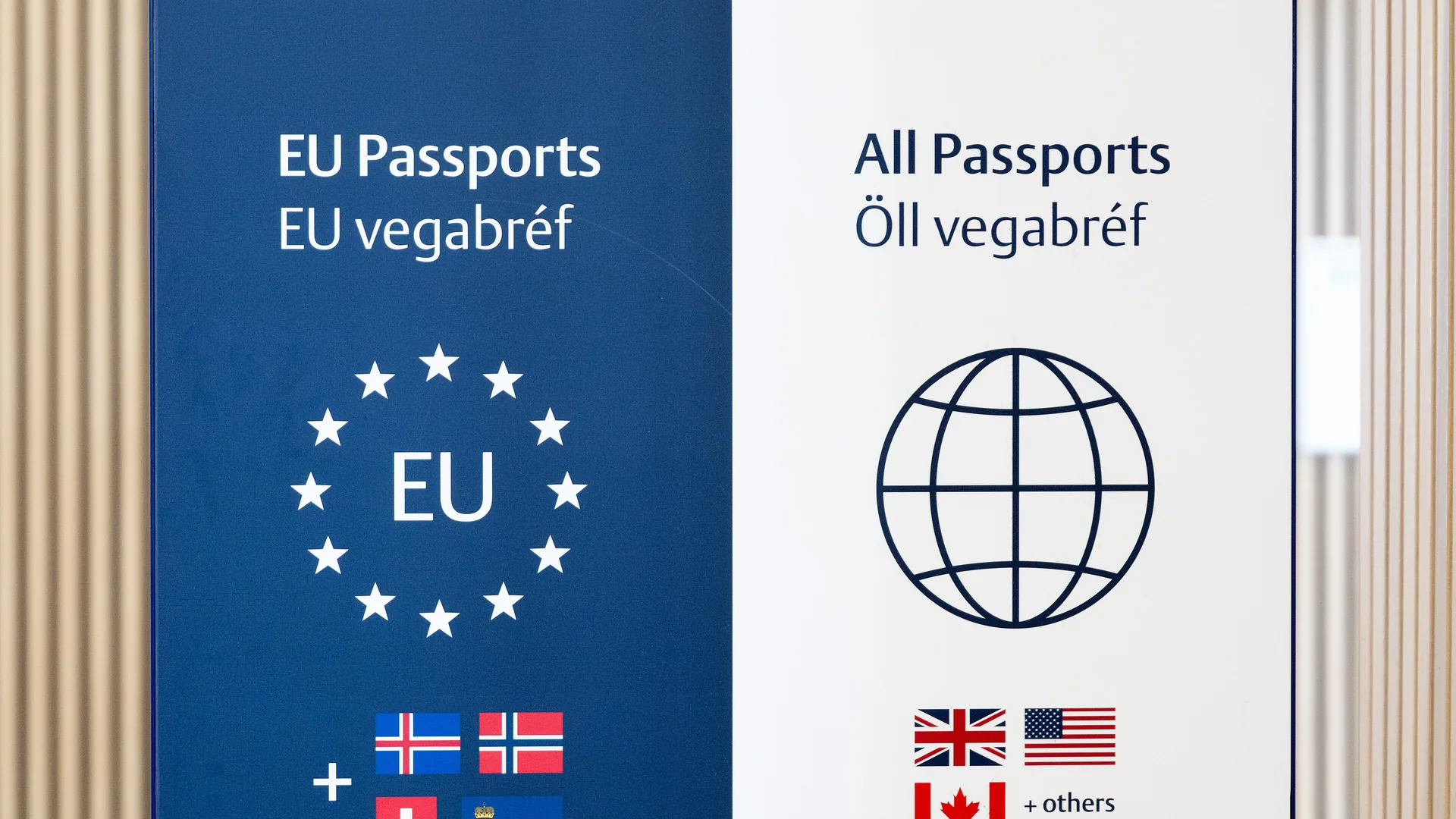
The biometric capture point is the passport-control desk, not a separate e-gate, and this is where the friction lives. Travellers are photographed and fingerprinted at the booth while an officer verifies the record against the travel document, and because the capture happens before the officer's decision, a technical mismatch or a poor-quality capture adds time to every single crossing rather than to a subset. [source-1] [source-5] Registration is being rolled out progressively across border posts rather than switched on simultaneously, which means the same traveller can experience a different border experience at Schengen airports in the same week depending on which posts have completed deployment. [source-1] [source-2] The UK government has framed the timing in exactly these terms, advising British travellers that checks should be expected on short-haul European trips and that queues at busy times may lengthen. [source-2]
2. Why British Travellers Were Warned
The United Kingdom's involvement is the part of the story that changed most traveller calculations this week. British and EU nationals agreed a short-haul travel arrangement that allowed British visitors to cross Schengen external borders at domestic ports without a biometric capture stop, and EES was designed to respect that arrangement on the basis that the UK operated equivalent border controls. [source-2] That equivalence assumption did not survive the policy change, and the UK government has issued explicit guidance that British travellers should expect checks under the EU's Entry/Exit System. [source-2] The practical consequence is specific: a British family flying London to a European short-haul destination now queues in the non-EU biometric channel rather than the EU citizen channel, and the queue is a different queue with a different processing model. [source-2] [source-5]
The distinction between the pre-arrival expectation and the on-arrival reality is the one that produces support tickets. Travellers booked tightly timed European itineraries, cross-channel connections, and cruise port calls, and all three depend on a processing time that the biometric step can extend without warning. [source-2] [source-6] Advice to British travellers that holds up in practice: build connection buffers as if the border were an international border rather than a domestic one, keep passport photographs stored locally for any online check-in that requests them, and treat the first crossing of the trip as the slow one rather than the transit crossings. [source-2] [source-6]
3. Separating EES From the Visa-Suspension Week
The same seven-day window carried a second, unrelated border story that the week's social coverage frequently merged with EES: a US State Department announcement about suspending visa processing for a group of 75 countries, which drew the single highest-scoring Reddit thread in the visa keyword sweep at 20503 points. [source-9] Those two events share a keyword, not a mechanism. EES is an EU external-frontier registration system; the suspension announcement concerns US visa adjudication for specified nationalities. [source-9] [source-10] The State Department's own advisory portal is the authoritative record for US posture, and it is also the correct place to check whether any announced suspension has an effective date, an exemption list, or a carve-out for already-issued visas. [source-10] [source-11] Travelers who read only social posts about the suspension risk drawing the wrong conclusion about who is affected and when. [source-9] [source-10]
A third strand in the same sweep deserves the same discipline. A thread reporting that the US is suspending visa processing for technology firms including Microsoft drew 13042 points in the r/news keyword sweep and 1117 points in r/immigration, but the underlying claim concerns employer-sponsored work visa programmes rather than tourist entry. [source-12] [source-13] The work-visa channel and the tourist channel are administratively separate, and a suspension in one does not imply anything about the other except that both will appear in the same feeds. [source-12] [source-13] [source-10] The verification path is identical in all three cases: read the government source, check the effective date, and check the exemption list. [source-10] [source-11]
4. Who Is Actually Affected
The affected population is larger than the headlines suggest and narrower than the doomscroll suggests. Non-EU short-stay visitors using visa-exempt travel, that is tourists and business travellers from the 90-day visa-exempt nationalities, are the core registered population. [source-1] [source-3] EU and EEA citizens do not register through EES, because their right of free movement is a separate legal instrument. [source-1] Long-stay visa holders registering a residence permit are captured under the five-year retention rule. [source-3] Transit passengers who do not pass through passport control are outside the scope entirely, which covers the large share of Schengen-to-Schengen connections where travellers stay airside. [source-1] [source-6]
| Traveller Category | EES Registration | Border Channel |
|---|---|---|
| Non-EU short-stay visitor | Yes | Biometric capture at passport control |
| EU / EEA citizen | No | Free-movement channel |
| Long-stay visa or residence permit holder | Yes, five-year record | Biometric capture |
| Airside transit, no border crossing | No | Not processed |
| UK national on short-haul EU route | Yes, per UK guidance | Non-EU channel, expect checks |
Sources: [source-1] [source-2] [source-3] [source-6]

Documentation discipline is the practical lever that reduces risk at the capture desk. The travel document presented must be the document used for the booking, because the record keys on passport number and a mismatch between booking passport and presented passport is the single most common cause of manual handling at biometric desks. [source-1] [source-3] Travellers whose passports are within six months of expiry should resolve that before departure rather than at the desk. [source-3] And anyone subject to a visa-suspension announcement, in any jurisdiction, should verify the current position on the issuing government's own advisory portal before booking, because the suspension lists and effective dates are the parts that change and the parts most often absent from social reposts. [source-10] [source-11]
5. The Data Question Nobody Answers on the Platform
The retention periods are published and the legal basis is public, but almost none of the week's social coverage carried either number, and the two together answer most of the questions travellers actually ask about the system. [source-1] [source-3] A short-stay record is retained three years and three months, which means the EES entry from a single trip is still on file long after the trip has stopped mattering to the traveller and well past any dispute about that trip. [source-1] [source-3] Long-stay records persist five years. [source-3] None of this creates an automated admission decision for ordinary visitors, because the system records the crossing rather than scoring it, but it does mean that a traveller's border movement history is materially more legible to authorities than the paper-stamp era made it, and that is a genuine change rather than a presentational one. [source-1] [source-5]
6. How to Prepare: A Six-Step Border Protocol
Six steps carry the practical load. First, verify the passport against the booking and confirm validity beyond the trip. [source-3] Second, check whether any visa-suspension or entry-restriction notice applies to the passport held, on the issuing government's portal rather than on social feeds. [source-10] [source-11] Third, treat short-haul European itineraries as international-border itineraries and rebuild connection buffers accordingly. [source-2] [source-6] Fourth, register traveller details in advance where the airline or carrier offers pre-registration, since the capture step is faster when the record is pre-populated. [source-1] [source-5] Fifth, keep ground-transport bookings refundable for the first 72 hours, because arrival waves and border queues displace local transport capacity independently of flight status. [source-14] [source-15] Sixth, keep a local copy of passport photographs accessible offline, which turns a desk problem into a thirty-second problem. [source-3] [source-16] Provisioning an Airalo eSIM or an unlimited Holafly plan before departure keeps the rebooking channel open from inside the terminal rather than outside it. [source-16] [source-17]
| Preparation Step | Reason | Reference Window |
|---|---|---|
| Passport matches booking | Record keys on passport number | Before booking |
| Validity beyond trip | Avoid desk-level rejection | Before departure |
| Suspension check on official portal | Lists and dates move | Within 72h of departure |
| Rebuilt connection buffers | Biometric step extends processing | At booking |
| Pre-registration where offered | Faster capture at desk | At check-in |
| Offline document copies | Desk problems become fast problems | Before departure |
Sources: [source-1] [source-2] [source-3] [source-10] [source-11]
Connectivity at the border is the quiet operational dependency, and a Kiwitaxi transfer booked at fixed price removes the arrival surge that a delayed border step creates. [source-14] [source-15] City activity bookings should carry the same refundable posture, since a border delay that eats a morning can invalidate a fixed afternoon slot. [source-18]
8. Compliance Edges and the Slow-Burn Risks
The first is the record itself: because the biometric entry is keyed on the travel document, a traveller who replaces a passport mid-trip generates a second record rather than an amendment, and the two records then describe one journey. [source-1] [source-3] Anyone travelling on a passport renewed shortly before departure should confirm that the document presented at the border matches the document on the booking, and anyone who does change documents mid-trip should carry both, because the earlier document remains the key on the earlier record. [source-1] [source-3] The second edge is the ETIAS interaction: EES and ETIAS are separate instruments with separate triggers, and travellers frequently assume that holding one satisfies the other. [source-8] [source-22] A visa-exempt visitor who holds an ETIAS authorisation is still registered through EES at the border, and a visitor who does not yet need ETIAS may need it before a later trip, so the two systems should be checked independently rather than treated as a single gate. [source-8] [source-22]
📑 7. Verified Evidentiary References (40 sources) — click to expand
- [1] Migration and Home Affairs (EU): The new Entry/Exit System went live on 12 October home-affairs.ec.europa.eu/policies/schenge…
- [2] GOV.UK: British travellers told to expect checks under EU's Entry/Exit System www.gov.uk/foreign-travel-advice
- [3] European Commission: Home Affairs, Schengen Borders Code and biometric registration policy home-affairs.ec.europa.eu/policies/schenge…
- [4] European Union (official portal): EU immigration and border policy hub european-union.europa.eu/live-work-study/t…
- [5] Reuters: What biometric border checks mean for non-EU citizens www.reuters.com/world/europe/what-biometri…
- [6] European Union (official portal): Schengen area, visa and border rules overview european-union.europa.eu/live-work-study/t…
- [7] EU-Lex: Schengen Borders Code regulation text eur-lex.europa.eu
- [8] ETIAS (official): Travel authorisation information for visa-exempt visitors travel-europe.europa.eu/etias_en
- [9] Reddit r/news (keyword sweep, October 2026): US to suspend visa processing for 75 nations, State Department says www.reddit.com/r/news
- [10] U.S. Department of State: Travel Advisories portal, official visa and entry notices travel.state.gov/content/travel/en/travela…
- [11] U.S. Department of State: U.S. Travel Guidance, visa and entry requirements by country travel.state.gov/content/travel/en/interna…
- [12] Reddit r/news (keyword sweep, October 2026): Microsoft is being suspended from program to apply for green cards for H-1B visa workers www.reddit.com/r/news
- [13] Reddit r/immigration (keyword sweep, October 2026): US Suspends Visa Program for Tech Firms Including Microsoft www.reddit.com/r/immigration
- [14] Kiwitaxi: Airport transfer booking across European hubs kiwitaxi.com
- [15] EconomyBookings: Car rental and airport transfer comparison www.economybookings.com
- [16] Airalo: eSIM data for European travel itineraries www.airalo.com
- [17] Holafly: European eSIM data plans esim.holafly.com
- [18] Klook: Bookable European activities with flexible cancellation www.klook.com
- [19] European Data Protection Board: Biometric data protection guidance www.edpb.europa.eu
- [20] EU-Lex: Regulation establishing an Entry/Exit System eur-lex.europa.eu/eli/reg/2017/2226/oj
- [21] European Commission: Digital travel documents and interoperability programme digital-strategy.ec.europa.eu
- [22] ETIAS (official): When ETIAS will be required and who is exempt travel-europe.europa.eu/etias
- [23] Foreign & Commonwealth Office (UK): UK government travel advice portal www.gov.uk/browse/abroad
- [24] UK Home Office: Border and immigration policy, official portal www.gov.uk/government/organisations/home-o…
- [25] Eurostat: Migration and border statistics portal ec.europa.eu/eurostat
- [26] Frontex: European Border and Coast Guard Agency www.frontex.europa.eu
- [27] European Commission: Infringement and Schengen rule-of-law materials commission.europa.eu
- [28] Politico Europe: EU policy coverage desk www.politico.eu
- [29] Euronews: European news desk www.euronews.com
- [30] Euractiv: EU policy and regulation coverage www.euractiv.com
- [31] BBC News Europe: Europe desk www.bbc.com/news/europe
- [32] Der Spiegel (English): European current affairs www.spiegel.de/international
- [33] Le Monde (English): European current affairs www.lemonde.fr/en
- [34] Corriere della Sera (English): Italian and European coverage www.corriere.it/english
- [35] El Pais (English): European current affairs english.elpais.com
- [36] EuroNews (English): Pan-European newswire www.euronews.com
- [37] Migration Policy Institute: Border and immigration policy analysis www.migrationpolicy.org
- [38] ECRE (European Council on Refugees and Exiles): Asylum and border policy monitoring www.ecre.eu
- [39] VisaGuide: Visa and entry requirement trackers by nationality www.visaguide.world
- [40] Passport Index: Global entry requirement and policy tracker discover.passportindex.org